

Digital communication opens up many opportunities – but only sensors that reliably deliver precise measured values offer real added value by IO-Link. Well established and appreciated by many users, both pressure sensor PP20H and CombiLyz AFI conductivity sensor excel by outstanding measuring performance and IO-Link interface, but now they offer even more interesting features such as simple and fast parameterization- even during operation. This way, secondary data like different process data output simultaneously or diagnostic data only accessible this way can be communicated from sensor to controller or even retrieved from the sensor memory if required. Further to the digital interface, the sensors also provide one or more conventional analog outputs for maximum user flexibility. Dual Channel - analog and digital interface in a single sensor Dual Channel enables analog as well as digital sensor operation or both at the same time - this way, Baumer process sensors such as conductivity sensor CombiLyz AFI and pressure sensor PP20H work both in conventional control topologies and digital IO-Link control environments. In process automation, the proven analog interface is helpful for sensor integration into existing control concepts. Nevertheless, in sensor commissioning, IO-Link advantages such as easy and fast parameterization or access to secondary data are a valuable help. For process control, parallel readout of conductivity or pressure value is enabled via 4... 20 mA analog output. More information, more process effectiveness IO-Link provides access to valuable secondary data: process data including sensor temperature respectively process temperature of PP20H. Such information allow for interesting conclusions, e.g. unusual temperature rise in containers or pipes. And, such data are basic for predictive maintenance. CombiLyz AFI conductivity sensor delivers information on media concentration in addition to media conductivity. By doing so, the medium in process and its concentration is precisely identified. Pressure sensor PP20H delivers ambient pressure information in addition to process pressure. Therefore, the sensor can be deployed for both absolute and relative pressure measurement. Enhanced process efficiency thanks to fusioned sensor data IO-Link allows for mutual and bidirectional sensor communication via the controller. This way, every sensor can utilize the measured values of other sensors to solve complex measuring tasks or for optimization of processes and production flow. Using conductivity sensor AFI for example, transmission of the measured temperature value would reduce response times of temperature compensation to 15 seconds or even completely circumvent them. In level detection in closed tanks, two fusioned pressure sensors enable direct indication of the filling level. The head pressure sensor transmits the measured value to the pressure sensor at the tank bottom for zero point adjustment. This way, the actual pressure is determined. With CombiLyz conductivity sensors and PP20H pressure sensors now featuring this digital communication interface, Baumer further adds on their portfolio of IO-Link process sensors. And, solutions for flow and level detection using this digital communication standard are also available. Further information: www.baumer.com/io-link-process-sensors

The new smart VeriSens vision sensors XF900 and XC900 control the collaborating robots (cobots) of Universal Robots within only a few minutes of setting up. The robot-compatible vision sensors are mounted directly on the cobot or above it. Thanks to the SmartGrid (patent pending), calibration in terms of image distortion, conversion into world coordinates, and coordinate alignment between the vision sensor and robot take place automatically and extremely easy. This eliminates the conventional required elaborate manual “hand-eyeâ€' calibration of the robot and vision sensor. This is not only more precise but also reduces the set up to a few minutes. The robot-compatible XF/XC900 models will be available from December 2019. The installation and configuration of the vision sensors are transparent and easy to understand – via the specifically developed VeriSens URCap interface for robot control, only a few steps are needed to benefit from the diverse VeriSens image processing options. In the programming of the robot itself, only two additional commands (nodes) are necessary to allow a great number of applications across various industries to benefit from the advantages of Vision Guided Robotics. Instead of taught-in waypoints, free positions are used on which objects are then recognized visually. In addition, the already established functions can check object overlaps and gripper clearance. In addition, VeriSens vision sensors can, for example, verify free storage area, carry out quality controls of objects variably positioned in the provided space, as well as identify and measure objects. More information at: www.baumer.com/verisens-ur

The flexible adjustment of systems to short-term requirement changes as well is an increasingly frequent production challenge. The new CleverLevel PL20 level switches no longer have to be parameterized to a specific medium but adaptively adjust to the medium. This saves setup time while maintaining high process safety. Regardless of whether the media are liquid, paste-like, sticky, or granular – the CleverLevel PL20 recognizes them reliably and securely The clever alternative to vibrating forks With the latest generation of the CleverLevel level switches, Baumer offers a suitable answer to the challenges in the applications of the process industry, from media detection in pipes to reliable overfill protection of tanks or leakage detection. The CleverLevel PL20 is the universal level switch for all media. It allows stable processes and minimizes downtimes. Even adherence, which occurs with pasty materials, does not affect the performance of the level switch. In case of adhesive materials, the CleverLevel continues to automatically adjust the switching level without the need for any parameterization. Thanks to the 360° LED switching state indicator, the sensor is additionally highly user-friendly for system operators and offers information about the state of the process at all times. With its compact design and very short immersion length compared to a vibrating fork, the sensor is very flexible to install, minimally invasive in the process, and easy to clean. Easy integration into existing and new processes Yet the sensor is not only the optimal solution for level recording. Thanks to an optional 4 .. 20 mA analog signal, it can additional differentiate among the media in the process while the switching level can be flexibly set. This interface enables the quick and easy integration of the sensor in already existing systems. At the same time, the large selection of process connections and adapters allow the flexible integration of the sensor. The IO-link interface supports both continuous communication for the control and the simple commissioning of the sensor. Learn more: www.baumer.com/cleverlevel

Switching point, switching window, filter, sonic beam width, output logic: when a new sensor is installed in a machine, a variety of parameters must be adjusted to the application. The parameter server function via the IO-Link interface is the solution for parameter exchange within seconds. This ensures maximum system availability. The parameter data set is stored in the sensor and redundantly on the IO-Link master as well. If a sensor is replaced by a sensor of the same type, the stored parameter settings can be transferred from the IO-Link master and the new sensor is ready for action within seconds. When the sensor is replaced, this saves valuable time and ensures maximum system availability. This function is also advantageous when commissioning new machines. Manufacturers who produce large numbers of machines only teach the sensor in once and duplicate the parameter data set from the IO-Link master via the push of a button to other sensors of the same type. Conversely, the sensor can also serve as a backup if the IO-Link master fails, so that the most current status is quickly restored. The parameter server function is available for Baumer sensors with IO-Link, including the ultrasonic sensors U500 and UR18, optical sensors O200/O300/O500, inductive sensors IR06/08/12/18/30, as well as process sensors such as FlexFlow flow sensors, CleverLevel level switches, or the pressure sensor PP20H. Further information: www.baumer.com/io-link
)
With innovation at its heart, Design Engineering Expo brings together the design engineering community to showcase the best innovations and latest technologies.' This 2-day, free to attend event is co-located with industry leading events Manufacturing Expo, Maintec, Engineering Expo, tct 3sixty'and Medtech, making it unmissable for those in the engineering industry.'

The biggest challenge many British manufacturers are still facing is a shortage of skilled workers. While advancements in Industry 4.0 technologies have brought a surge of innovation to the sector, ultimately, it's having people with the right skills that is key to driving the industry forwards. ' There are many reasons as to what's behind the skills gap, including experienced workers retiring faster than new workers entering the industry and manufacturing still appearing to be low on the list of career options for young people due to an outdated perception of the industry being monotonous and low-paid. Not to mention male-dominated. ' We are working with Napier PR to conduct a survey into this important topic to find out where we are now and how the pandemic may have affected the situation even further.' The survey is anonymous but please enter your email if you would like to be entered into a draw to win: Prize 1: Apple 10.2" IPad 9th Generation (64GB) - Space Grey ' Prize 2: '100 Amazon Voucher ' Prize 3: '50 Amazon Voucher The survey will close on Friday 8th April 2022. Take the survey here now '

With the Government's Net Zero Strategy setting out how the UK will deliver on its commitment to reach net zero emissions by 2050 the importance of sustainability for our industry is higher than ever before.' Manufacturing'Expo'will be contributing to this important cause by running a Net Zero event on the'8-9 June'at the NEC in Birmingham via our Tree Planting Programme. Find out more'https://forestnation.com/net/forests/meweek/?r=13525 Register a free pass now to'get involved'- 1 tree will be planted for every visitor that attends! Register to attend here now


The Smart Factory with its highly flexible production lines requires not only the intelligent networking of devices, but also the linking of the field and control level with the IP and enterprise management level. Sensors play a key role in the system. They collect status information for the machine directly in-place and in real-time so as to create a virtual representation of the physical world. Intelligent sensors make it possible to provide not only the primary data but also service data in the form of secondary data concerning their own status or their surroundings.
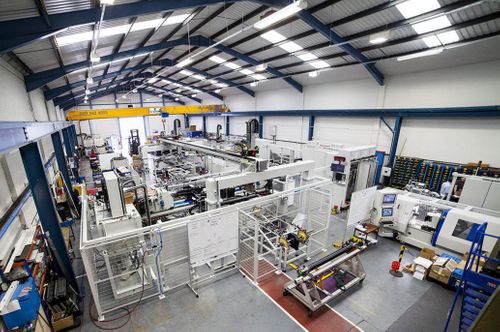
Control technology solutions from Siemens have been specified on a new range of cutting-edge coating machines forming part of a new market-leading modular production platform. The platform has been created by leading production machinery manufacturer, Emerson & Renwick Ltd (E&R) and incorporates vacuum, wet and digital coating capabilities, with the vacuum coating solution identified as a radical and disruptive technology innovation. Working with partner, HMK, Siemens' control technology, including S120 and 1F7 motors, S7-1500 SIMATIC advanced controllers, IPCs and HMIs, now form part of the control solution to be offered on the new machines going forward. Gary Kitchin, managing director at HMK, comments: “HMK has worked with E&R for a number of years, specialising in control solutions. E&R has developed a range of coating/converting machines as part of a new modular production platform, including the ability to handle vacuum, wet and digital coating requirements. As part of the development, we were able to demonstrate the performance and reliability advantages of Siemens' control technology and help ensure it would be offered as first choice on the coating machines as they are produced as part of the modular platform. The technology has been proven on initial development machines and will be the main control architecture on future purchased machines.” Ben Clements, managing director at Emerson & Renwick Ltd, says: “We are already seeing high levels of interest in this cutting-edge modular platform from the OEM market. The vacuum machine, in particular, has proven particularly popular. Large end users have visited our premises to view the technology in action, and we have already taken multiple orders as customers can see the benefits it delivers. The coating solution is a real area of focus for the business and we believe the machines we are developing are truly ground-breaking. “By partnering with Siemens and HMK we know we are accessing world-class technology control solutions to support the platform, and believe we have current ‘best in class' control functionality, as well as a future proofed control solution going forward.” Keith Thornhill, Business Manager – Production Machines Siemens UK & Ireland, concludes: “This has been an exciting project to be involved with. The fact that our control technology, alongside the system expertise provided by HMK, provides the answer for E&R as it continues to innovate and develop real advances in coating machinery capability is testament to what can be achieved through effective collaboration.” Ends Media contacts For further information, please contact: Paul Addison at Siemens paul.addison@siemens.com Nicola Pittaway at McCann PR nicola.pittaway@mccann.com or 0121 713 3744 Follow us on Twitter at: www.twitter.com/siemens_press About Siemens Siemens AG (Berlin and Munich) is a global technology powerhouse that has stood for engineering excellence, innovation, quality, reliability and internationality for more than 165 years. The company is active in more than 200 countries, focusing on the areas of electrification, automation and digitalization. One of the world's largest producers of energy-efficient, resource-saving technologies, Siemens is a leading supplier of efficient power generation and power transmission solutions and a pioneer in infrastructure solutions as well as automation, drive and software solutions for industry. The company is also a leading provider of medical imaging equipment – such as computed tomography and magnetic resonance imaging systems – and a leader in laboratory diagnostics as well as clinical IT. In fiscal 2016, which ended on September 30, 2016, Siemens generated revenue of €79.6 billion and net income of €5.6 billion. At the end of September 2016, the company had around 351,000 employees worldwide. Further information is available on the Internet at www.siemens.com.

System-to-system integration from OT to IT Papeterie de Mandeure is located in the wooded Jura region of eastern France. The company has been producing paper for almost 150 years, specializing in white and colored high-quality paper and cardboards used for graphic design, packaging, and tickets of all kinds. A strong factor in the company's continued success over the past century and a half is their willingness to adopt new technologies. Their latest plans are to connect to MES (Manufacturing Execution System) and SAP, to integrate data from their plant into these systems running at head office. As a first step, to gain a clearer picture of their production process, the company has begun using the Cogent DataHub for this real-time data integration. There are several systems to be integrated. The production machines for the paper-making process are controlled by a Drives system. The auxiliary equipment, such as motors, pumps, and regulators of water pressure, flow, and temperature, is all controlled by a separate DCS system. The plant also uses a Quality Control System (QCS) to measure the quality of the paper product, as well as a Defects Inspection System. Until recently, these four systems operated for the most part autonomously, with operators often conveying information from one system to another manually. Although each system uses one or more OPC servers for data communication, the engineering staff had not been able to connect them together well enough to meet their needs. "Our challenge was that we have systems from several different vendors," said Laurent Bulle, Electricity Regulation & Automation Engineer and project lead. "It was not possible for the systems to talk to each other even using OPC. For example, between my Drive systems and DCS system, the OPC communication was active but some data did not pass between the systems and we could not figure it out. Our first goal was to get all our systems talking to each other without any problems." In addition to connecting the systems, a second goal was to integrate their data into the company's MES and eventually to SAP, so that they could start doing cost/benefits analysis on their production. As part of the Clairefontaine Group, Papeterie de Mandeure needs to generate detailed reports of production quantities and costs. "We work very closely with Head Office," said Bulle. "They have been using the DataHub, and they recommended that I try it. With the help of technical support from Chaimae Khanchoufi at MAC Solutions, our DataHub distributor, I was able to install and configure the DataHub, and make all the necessary connections." The requirements for the project were substantial. Data from the Drives OPC servers had to be sent over redundant paths across the network to a server running at a central location. There the redundancy would be resolved, and the data sent on to OPC servers connected to the DCS. At the same time, data from the DCS OPC servers needed to be sent along similar but separate redundant paths through the central server and on to the Drives OPC servers. Since this was server-to-server communication, OPC bridging was needed on the central server. And since the OPC servers were OPC DA, OPC tunnelling was required. Additionally, the Drives and DCS systems are running on the shop floor, connected to OT (Operations Technology) networks, while the central server runs in the office, connected to the IT network. The OPC tunnels had to connect OT and IT, while security demanded that all firewall ports on the OT network stay closed. The DataHub was a logical choice for Bulle. "We looked a bit at other products, but honestly not in any depth," he said. "I was under a deadline to finish this project. I talked with an engineer at our head office, Mr. Thierry Alexandre at Papeteries de Clairefontaine. We collaborated for a day to see what product could address our requirements and we quickly came to the DataHub." Bulle installed a DataHub on each OPC server machine, as well as on the central server in the office. He configured OPC client connections to each OPC server, and outbound, redundant tunnelling connections to the central DataHub. On that DataHub he brought the redundant connections back together, and configured the server-to-server bridging required for each connection. He also installed separate DataHubs on the QCS and Defects Inspection System machines, configured tunnelling and OPC client connections, and was able to fully integrate both of them into the system. Finally, he used the DataHub's Database feature to log all the data to a database accessible by the MES. "We are pleased with the installation," said Bulle. "We were able to resolve all of our communication issues between systems, and our database is now working. I have left the project to the team that takes care of the MES and I no longer need to touch the system. Everything is functioning very well and we are very happy."
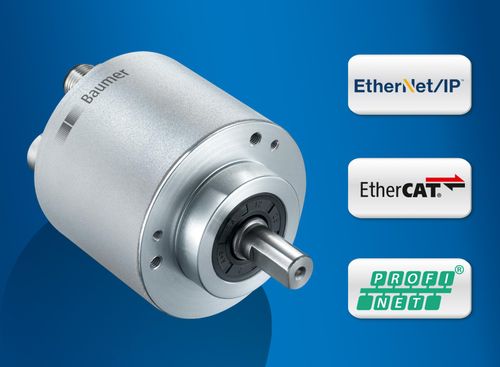
The Baumer magnetic encoders of the EAM580/360 series are unbeaten when it comes to reliability and precision. "No competitive product of similar robustness and longevity could be a match for them in terms of absolute angular precision," says Mr. Daniel Kleiner, Head of the Industrial Encoder Business Unit. The Baumer absolute magnetic encoders feature an angular accuracy of +- 0.15 degrees for ultra-precise positioning tasks. According to Kleiner, with this generation of robust magnetic encoders Baumer has "reached a dimension of precision that previously only optical encoders could deliver". Furthermore more convincing features added to the encoder families are integrated efficiency-increasing interfaces. Among other things, the secret for the outstandingly high precision and robustness of Baumer encoders lies in the patented arrangement of twin magnets (patent pending) and their innovative interaction with a powerful, energy-efficient microprocessor and sophisticated signal processing algorithms for conversion, filtering and interpolation of measured values. Operating on magneto resistive (MR) technology, the MAGRES encoders deliver two signal periods per revolution, which are twice as many as provided by Hall sensors that are deployed in competitive products. And, everything safely encased in a robust design to endure shocks and vibration. In the EAM development, Baumer was backed by unique knowhow and experience. As one of world's leading manufacturers of sensors and measuring instruments, Baumer not only co-invented basic principles of magnetic encoders. For two decades by now, Baumer has been extremely successful in this domain and the MAGRES encoders of the fourth generation are the living proof. Thanks to their outstandingly high accuracy, these encoders are even suited for medical products. In patient couches of X-ray machines and computer tomographs, for example, they ensure the exact positioning of patients during treatment. . Here, the fraction of an angular degree can be decisive for the success of the treatment. And in great many more industrial applications, the high-precision EAM 580/360 encoders are a primary factor for the “application's overall efficiency and effectivenessâ€'. This is key and ever more influenced by encoder interface variety, particularly in industrial environments. Here too, the MAGRES encoders convince all along the line. Further to their varied fieldbus interfaces, Baumer offers the biggest real-time Ethernet interface variety including PROFINET, EtherCAT and EtherNet/IP. This is an enormous user benefit for simplified device integration. But in the first place, it means increased system uptime by Link Layer Discovery Protocol (LLDP) for neighborhood detection, as well as Media Redundancy Protocol (MRP) and Device Level Ring (DLR) for continued data transmission to the controller even in the event of network branch interruption. The OPC UA communication standard is also supported. This ensures a secure and non-reactive data exchange between different systems. Consequently, the EAM580/360 encoders are ready for the Industrial Internet of Things (IIoT) providing optional diagnostic data for position, speed, temperature and operating hours. This way, users are offered process optimization and optimum machine and installation designs. "The MAGRES encoders enable our customers to enhance efficiency and increase their competitive edge," says Daniel Kleiner.
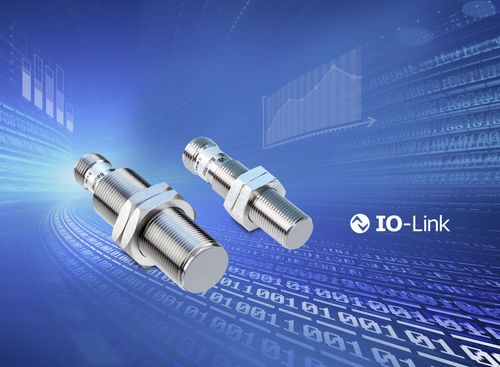
Baumer introduces fully digitized inductive IO-link sensors with the most comprehensive diagnostic data on the market. In addition to sensor temperature, operating voltage, and operating time, the sensors also collect the number of boot cycles, the switching frequency, and distances. When required, this information is easy to retrieve via the IO-link interface and can be directly digitally processed in the control. The sensors are additionally equipped with a memory function. The histogram function allows the evaluation of the frequency distribution of process and diagnostic data across a relevant period of time. For condition monitoring, information regarding the condition of machines and systems is very easy to collect and evaluate. This data constitutes the basis for predictive maintenance. Specific analysis of the collected diagnostic and process data allows the targeted improvement of system effectiveness and the optimization of processes. The inductive distance sensors AlphaProx primarily provide highly precise, micrometer-accurate digital distance information. With a cycle time of 0.6 ms and a switching frequency of 1.25 kHz, the inductive sensors of Baumer are the fastest on the market. The above-mentioned comprehensive diagnostic data have been newly added. For example, recording the number of boot cycles or the previous operating time allows a very precise determination of the sensor's age. This permits the system operator to draw future-oriented conclusions of when a component needs to be replaced or serviced. Machine downtimes can then be optimally and efficiently planned. In case of undesired machine conditions, the unique histogram function for logging process and diagnostic data makes it easier to understand errors and thus simplifies error analysis. The evaluation of trends is also facilitated. An increase in the sensor temperature can indirectly indicate that a machine component in the vicinity of the sensor is overheating or the immediate ambient temperature is increasing. This may be an advance indication of an imminent machine downtime. In addition to temperature values and power supply, the measured distance and frequency values are also available for evaluation as a histogram. To prevent the distortion of statistics during the process when commissioning or replacing a sensor, the statistics data can be reset any time. Each plant engineer can intuitively retrieve the data for histogram evaluation as required via the user-friendly IO-link interface. At the same time, the elaborate conversion of units is also eliminated, as the sensor already processes this information internally and issues it in the desired unit. Baumer offers inductive sensors with the most comprehensive diagnostic data via the IO-link in sizes ranging from 6.5 mm to M30 with a range of up to 18 mm with flush mounting. Most of this diagnostic data is also available with the Baumer ultrasonic sensors UR18 and U500.