


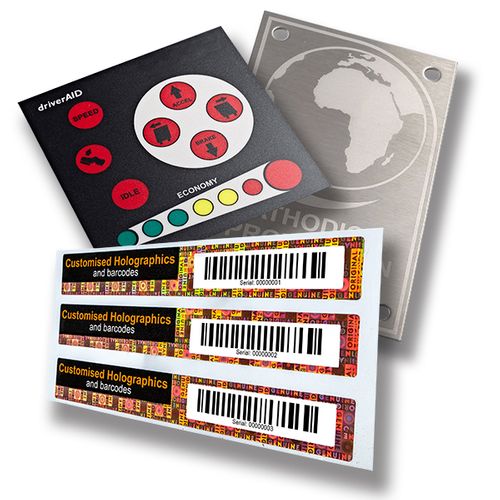
Labels are often small, but their impact can be significant. A well-designed label does far more than display a product name or serial number: it communicates essential information, supports brand identity, guides users, and helps products perform safely and reliably in the environments where they are used. Whether applied to industrial equipment, control panels, machinery, tools, or consumer-facing products, a label must be clear, durable and fit for purpose from the very beginning. With over 50 years of experience in label printing, GSM Graphic Arts understands how important it is to get every detail right. The wording, colours, layout, materials and fixing method all need careful consideration before production begins. A label that looks effective on screen still needs to work in real life, where it may face handling, cleaning, weather, heat, chemicals, abrasion or long-term wear. By thinking about these factors early, costly mistakes can be avoided and the finished product can perform as expected. Our one-stop service takes customers from initial design through to manufacture and assembly. The process begins with understanding the application: where the label will be used, what it needs to communicate, how long it must last and what conditions it must withstand. From there, our studio team prepares comprehensive digital artwork, ensuring that the design is accurate, practical and ready for production. This artwork travels through the factory with the label, nameplate or graphic overlay, helping to maintain consistency and quality at every stage. Choosing the correct fixing method is a basic but essential part of producing labels, graphic overlays and nameplates. Adhesives, mechanical fixings and material selection all influence how well a label performs once it is applied. The right choice depends on the surface, environment, expected lifespan and the level of durability required. For demanding applications, standard materials may not be enough, which is why we offer robust solutions such as anodised aluminium, etched and filled stainless steel and under-surface printed plastics. These materials help create labels that are hardwearing, legible and built to last, even in challenging industrial settings. Ultimately, good label printing is about more than appearance. It is about combining design expertise, technical knowledge and manufacturing experience to produce a label that does its job properly. By working with an experienced team from the outset, customers can be confident that their labels will not only look professional but also perform reliably throughout the life of the product. For further information, please visit http://www.gsmgraphicarts.com
Brightly Software, a Siemens company, will demonstrate how manufacturers can bridge the gap between shop floor operations & maintenance and top floor management with Asset Essentials on Stand J46 at Maintec 2026. Maintec 2026 forms part of Smart Manufacturing Week 2026 and takes place at the NEC Birmingham from 3-4 June 2026.

Walk through most factories and you will hear the same quiet frustration. Teams want better visibility, faster answers and fewer delays in getting systems up and running. The appetite for digital improvement is there, yet progress often stalls behind long timelines, complex integrations and decisions that drift across multiple departments. In many cases the challenge is not capability or willingness. It is overcomplication. The experience at nudie Foods offers a useful counterpoint. The company introduced OFS on its production lines in just six days. Operators were logging data on the second day. Unplanned downtime fell by 60% in the first week. The IT footprint was small and the installation demanded very little from internal teams. This outcome was not the result of a grand digital overhaul. It came from choosing a simple approach that supported the pace of the shop floor. There is a longstanding assumption that new systems must be intricate. The idea persists that value only emerges once architecture diagrams are redrawn and a full catalogue of legacy systems is mapped and re mapped. This creates a barrier long before the first line of code is touched. The weight of planning grows and the promise of improvement moves further away. nudie took another route. They chose a tool with a light touch, introduced it where the need was clear and allowed operators to engage with it immediately. The most striking part of their story is not the speed. It is the way teams adapted once they could see what happened on the line in real time. Questions changed. Conversations changed. Decisions became easier to make because the information behind them was visible and trusted. This is where simplicity becomes powerful. A system does not have to be large to be effective. It has to offer clarity. When people can see the pattern of micro stoppages, the timing of small deviations or the moments where the line hesitates, they begin to solve problems earlier. They also begin to notice issues that would never have been raised in a meeting or written on a form. Small, repeated interruptions often stay hidden because they feel normal. Data brings them to the surface. There is also a cultural aspect. A system that arrives with a long manual and a lengthy training schedule tends to sit slightly apart from the real work of the day. A system that fits the pace of the line becomes part of the rhythm straight away. At nudie, teams did not wait for reports or technical guidance. They experimented, asked questions and discussed what they saw. The tool shaped behaviour rather than adding another layer of process. This mindset has implications for the wider sector. Many manufacturers assume that digital progress sits behind large IT programmes. These programmes are valuable, yet they are not the only path. Small, well chosen tools can create quick wins, raise confidence and make it easier for operators to contribute. When the first steps are simple, the next steps become easier to imagine. There is also a practical truth. Most manufacturing challenges appear first at the line. They show up in subtle changes in speed, waste, drift, flow and timing. These issues do not wait for perfect integration plans. They need systems that meet the reality of the shop floor in a way that is immediate and accessible. nudie’s journey offers a reminder of what happens when clarity is prioritised over complexity. The improvement did not come from rewriting their entire digital landscape. It came from giving people information they could use the same day. This level of simplicity can feel refreshing because it removes the sense that digital transformation must begin with a vast, multi year plan. Manufacturers looking ahead may find value in this perspective. A project does not have to be large to be meaningful. Momentum often comes from the first clear view of what a line is truly doing. Once that view is in place, teams tend to move faster, communicate better and solve the small inefficiencies that quietly shape performance. In the rush to modernise, it is easy to assume that the path must be difficult. nudie’s experience suggests another possibility. Improvement can begin in days when the right systems are chosen for the right reasons. It can also feel lighter, more engaging and more rooted in the work that people do every day. Sometimes the simplest approach is the one that creates the most space for progress.
When it comes to our relationship with consumption, there’s a certain irony attached. Before the 20th century, we were driven by a culture of reuse where repairing, repurposing and valuing items was the norm because goods were expensive and resources were scarce. Fast forward a century, and doesn’t that sound eerily familiar? It’s almost comical that the seeds of “throwaway living” were sown as far back as the 1920s with the introduction of planned and dynamic obsolescence. Creators began intentionally limiting the lifespan of products or forcing regular updates to make older models feel outdated. This shift, followed by the consumerism boom of the 1950s and the plastics revolution, truly popularised disposable products. Now, as we struggle with soaring costs, finite resources and stringent regulations, we’re urgently trying to return to the pre-20th-century mindset, effectively hitting the rewind button on nearly 100 years of convenient, yet unsustainable, habits. When it comes to manufacturing, the story is not so dissimilar. However, losses are frequently designed by default. Excess heating and cooling compensate for inefficiencies elsewhere, warm air and steam are vented because there’s no widely recognised use for them, and water is treated to drinking quality standards (or worse, simply disposed of) only to be used in applications that don’t require it. None of this happens through negligence, but it happens because the original processes or systems were for throughput, not reuse. Yet small changes can make a significant difference to value. Excess heat can be captured and redirected to support low-temperature hot water or adjacent processes. Cooling demand can be reduced through better insulation and process optimisation, rather than more energy input. Water can be used once, treated appropriately, and looped back into operations, or replaced entirely with harvested rainwater where potable quality simply isn’t needed. These are all movements toward a circular model. Seen through this lens, waste isn’t an inevitable by-product of manufacturing, but a design challenge. And design challenges, once recognised, are solvable. Ready to explore how the circular economy can benefit your business? Download Veolia’s Circular Economy Guide for practical strategies, success stories, and insights to help you build a more profitable and sustainable manufacturing operation. Web page: https://www.veolia.co.uk/insights/insights/how-transition-your-business-circular-economy

Spend any time on a factory floor and you can see the skill that keeps production moving. People adjusting settings by feel, noticing when a line sounds slightly different, or spotting small quality issues long before they escalate. That craft is still central to food manufacturing. But the sites making the biggest strides in efficiency, consistency and sustainability are the ones pairing that experience with something quieter. They’re treating data as seriously as they treat ingredients, raw materials and equipment. For years, manufacturers tried to improve by looking outward. New machines, new automation and bigger investments. Exciting stuff. But the biggest gains often come from understanding what is already happening inside existing lines. Many operations carry hidden losses that slip beneath the noise of the day. Small pauses that no one notices. There’s rework that never gets properly logged, ingredient variances that add up across a shift, and energy wasted in stop–start cycles. These micro-inefficiencies shape performance far more than a single breakdown ever will. The little things reveal the most Every product that moves through a factory leaves a digital trail, even if the business isn’t capturing it. Line speeds, stops under a minute, temperature fluctuations, operator adjustments, waste levels, idle equipment. When these patterns become visible, teams often discover that tens of thousands of pounds are disappearing into gaps no one realised were there. At one major confectionery manufacturer, for example, data captured within minutes of installation revealed that a high-volume line was stopping roughly every fifteen minutes. The pauses were short enough to be forgotten, yet over time they pulled speeds down and masked deeper issues. Once the team could see the pattern clearly, they lifted OEE by around five percent in just two months and paid back the project in under a year. The machines stayed the same. What changed was how they approached decision making. These small insights matter because food manufacturing is finely balanced. A few seconds here or a handful of grams there seem inconsequential, but across continuous production they become the difference between stable margins and rising costs. Real-time visibility protects quality and reduces waste Traditionally, problems surfaced only when product quality slipped. Real-time data turns that reactive cycle into something calmer and more controlled. Teams can see when a line is drifting before the product suffers. It might be a mixer slowing slightly, a wrapper that judders more than usual, or an oven idling longer between runs. Early signals allow early fixes. This doesn’t replace the judgement of skilled operators. It supports it. Data gives teams the confidence to act sooner and stops small deviations from becoming expensive waste. The rise of AI as a practical production tool AI in food manufacturing no longer sits in the realm of R&D presentations. It is quietly becoming part of day-to-day operations. Models now learn from historic production patterns and highlight relationships that would otherwise stay invisible. What we’re seeing is yield swings linked to ambient conditions. Waste spikes tied to specific materials. Lines behaving differently across shifts. At Tip Top Bakeries, part of AB Foods, teams began by digitising paper checks using OFS Flow. Once these digital workflows were in place, AI tools could interrogate the data alongside production information, surfacing correlations and patterns that helped the site improve material yields and reduce losses. It gave operators and team leaders a clearer understanding of where to focus each day without adding to their workload. The value isn’t in replacing expertise. It’s in giving teams clearer context for the decisions they already make and empowering them to use the data at hand. Sustainability demands better operational clarity Manufacturers are under growing pressure to demonstrate how they are cutting waste, saving energy and lowering emissions. Scope 1 and 2 reporting requirements are tightening. Retailers want more transparency from their supply line, and further down the chain consumers expect stronger environmental commitments. Yet sustainability improvements rarely come from grand gestures. They come from the cumulative effect of hundreds of small decisions across shifts, such as shorter changeovers, fewer restarts, tighter temperature control and better sequencing of batches to reduce clean-down cycles. All of these rely on reliable information rather than memory or guesswork. The sites that have embraced real-time visibility often find that sustainability becomes more manageable. They waste less, rework less and use less energy because they are not fighting blind. Data frees people to focus on the work that matters There is a misconception in parts of the industry that more data means more complexity. The opposite is usually true. The level of complexity depends on how the data is collected, reported and visualised. When routine information is captured automatically, operators spend less time on paperwork and more time on quality, process and problem-solving. Investigations become simpler at the same time as audits become calmer and communication improves. The result is that teams feel more in control because they can see what is happening rather than relying on fragmented records. An independent, single source of truth builds trust and enables teams to focus their time and resources on improvement actions. Digitisation at multinational food businesses such as Aryzta has shown this clearly. When the company digitised more than 100 paper checks at one site, investigations became faster, duplicate checks were eliminated and analysis went from days to minutes. Staff engagement rose because people no longer had to rely on memory to do the checks or understand what happened on the floor. Decisions could be based on facts, not frustration. Making better use of what manufacturers already have The biggest shift across food manufacturing today isn’t about new kit or headline-grabbing innovation. It’s about understanding the equipment, processes and people that are already there. It’s about spotting the small patterns that shape performance. It’s about making daily decisions with clarity rather than intuition alone. Data won’t replace the skill that drives food production. It won’t shape dough, calibrate seasoning or judge texture. But it will help teams act faster, waste less and run more consistently. In an industry facing volatile costs, sustainability pressure and rising expectations, that makes it one of the most important ingredients on the line.
PRESS RELEASE: London, UK. October 25th, 2025 - The London based team behind Logidot has secured a grant co-funded by UK Research and Innovation’s highly competitive Innovate UK BridgeAI scheme. The competition attracted over 1000 applications awarding only a handful of winners in logistics. Logidot’s winning project - in collaboration with the University of Bath’s centre for Smart Warehousing and Logistics systems, and a leading contract logistics company - aims to validate and develop an AI-agent to support competency and AI adoption for various roles in the logistics sector. Less than 25% of businesses in the logistics and warehousing sector are currently using AI. The innovation seeks to address known AI adoption barriers through the development of a customisable and scalable AI-Agent/Virtual Assistant based learning tool aimed at seamlessly supporting the daily tasks of staff across multiple areas of operations, helping overcome a lack of familiarity and trust in AI and known knowledge gap across the industry. Emerging AI systems generally fall into fully autonomous (e.g. robots) or collaborative semi-autonomous systems involving human input. While large language models (LLMs) have enabled significant progress in natural language interaction, they remain prone to hallucinations — confidently producing inaccurate information. Overcoming these limitations is critical not just for safe deployment, but also for enabling future AI systems capable of continuous, context-aware collaboration with humans. Multimodal AI, grounded in real-time sensory data and guided by human oversight, offers a more reliable path. This “Physical AI” approach, exemplified by Logidot, fuses data from location sensors, operator-held devices, and human-in-the-loop feedback to deliver a location-aware assistant tailored to both frontline workers and managers — a first in the warehousing sector. Efficient logistics underpins UK trade and supports over 7 million workers, but the sector faces worsening labour shortages, high turnover, and surging costs — issues intensified by Brexit. 86% of UK firms report warehouse operative shortages (CILT), with many relying on temporary agency staff who may represent up to a quarter of the workforce. High onboarding costs and challenges in monitoring productivity add pressure. AI tools like Logidot’s assistant could reduce training time by up to 85% and help upskill staff, improving retention and operational continuity. Efficient, cost-effective and safe operations require precision planning, people/assets management and agile responses to changing priorities. The industry is embracing innovative digital technologies and robotics to automate operations, improve efficiency and reduce costs. However, with increasing automation, human-robot collaboration and the measurement and tracking of goods, equipment and workforce activity across operations becomes increasingly challenging. AI promises to help, but industrial players report major barriers to adoption - including skills and training challenges, lack of company-wide strategy, privacy and security concerns, information accuracy and overload and of course speed of integration with legacy systems and running costs. To address these challenges, Logidot and the University of Bath are developing an AI tutor to support continuous upskilling and reskilling, particularly for seasonal and frontline workers. Using natural language and voice interfaces, the system offers fast, intuitive support for staff engaged in physically demanding roles. The AI assistant integrates a client-specific knowledge base with Logidot’s IoT platform — providing real-time visibility of assets and workforce location — and connects with an AI-powered warehouse simulator and execution system to enable seamless collaboration between human and automated operations. This will enable: - A personalised AI tutor for continuous upskilling and reskilling. - Real-time task guidance and decision support tailored to user roles and locations. - Enhanced managerial oversight, enabling supervisors to monitor team competency, training progress, and task execution through explainable insights. - Intelligent system integrations, connecting frontline staff, warehouse management systems, and automation platforms to reduce errors and enable real-time coordination. Logidot founder Dr. Niccolo Corsini stated: “Covid-19, Brexit, the wars in Ukraine and the Middle East… the UK warehousing and manufacturing sectors have weathered crisis after crisis with incredible resilience and kept vital supplies flowing. A perfect storm of labour shortages, rising costs and ever higher customer expectations is forcing industry to automate rapidly. Physical AI promises to be a key enabler and we are honoured to have been recognised as an innovative solution to help companies on this digital transformation journey. We look forward to collaborating with Bath University as well as our other partners.” University of Bath’s Centre for Smart Warehousing and Logistics Systems Director Vaggelis Giannikas stated: “AI, like many other technologies, can be extremely beneficial. Yet, we see time and again traditional industries to be lagging behind when it comes to its adoption. This project will help use our expertise in AI tools for industrial operations but also in technology adoption barriers to shape the future of smart logistics and warehousing.”. For more information about Logidot visit www.logidot.com and see video announcement. To become a pilot tested reach out on info@logidot.com
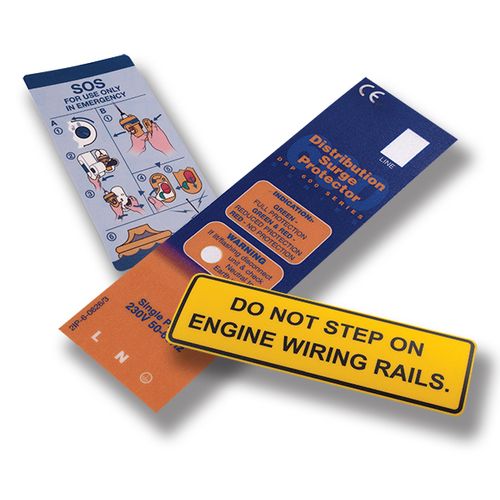
GSM Graphic Arts has over 50 years’ experience in printing. We have a wealth of knowledge that we can share with our customers to ensure the perfect design for any label, nameplate or graphic overlay and to do so we start with the 3 C’s. CONCISE – CLEAR – COMPLIANT Concise As many labels, nameplate and graphic overlays are used as warnings for hazards it is important that the information is kept to a minimum and concise. This comes from being direct with instructions and directions, removing any colloquial language and sticking to the bare minimum required for the command. The label does not need extra ‘fancy bits’ that detract from its main purpose or message. That said, it may be useful to have a logo or QR code on the label or nameplate for further information or reference and this can be subtly worked into the design of the label. Clear Labels and nameplates we manufacture are used for warning and safety and need to be interpreted by many people. Because of this, it is crucial that these indicate very clear messages and instructions. Labels that house a warning need to be easy to understand and follow quickly. To ensure this, in our design we encourage clear text to minimise reading and generic, universal symbols. Our design team work closely with our technical team to ensure functional operations and warnings are clear. Compliant Many product manufacturers use labels and nameplates on their products to display regulatory and compliance logos or registration numbers. Generally, it is the law that these markings must be shown on their products and is something that needs to be considered when designing the labels. Whilst the markings are law it is still possible to produce an aesthetically pleasing label with all the detail required. The comprehensive range of concise, clear and compliant labels that GSM manufactures can be discussed further with our team of experts, please call +44 (01845) 522184 or click here to visit our website.

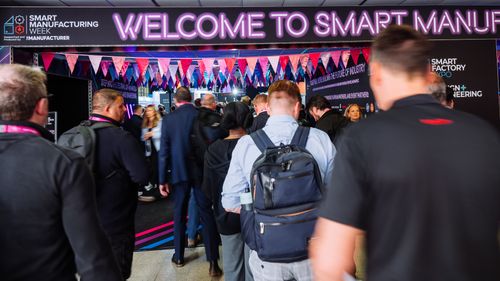
Smart Manufacturing Week (SMW), the UK’s biggest festival of advanced manufacturing and engineering, has unveiled a fresh look and exciting new features for next year’s show, taking place at the NEC in Birmingham on 3-4 June 2026 which includes Smart Factory Expo, Maintec, Drives & Controls, Design & Engineering Expo, Manufacturing Digitalisation Summit and The Manufacturer Top 100 Awards.
This achievement highlights MRPeasy’s ongoing mission to level the playing field for smaller manufacturing firms by providing affordable, powerful tools traditionally accessible only to large enterprises. With intuitive features, transparent pricing, and rapid implementation, MRPeasy empowers UK manufacturers to improve efficiency, enhance visibility, and scale their businesses sustainably. Available in 32 languages and used across more than 60 countries, MRPeasy continues to expand its global footprint. Approximately 80% of its clients are based in English-speaking regions, with the UK standing out as one of its strongest markets. A recent survey of MRPeasy customers revealed impressive operational improvements on average, including: 67% improvement in inventory tracking accuracy 54% increase in overall operational efficiency 42% enhancement in cost control 39% improvement in on-time, in-full deliveries “These figures reflect the real progress our customers are making,” said Sara Duff, UK Business Development Manager at MRPeasy. “We’ve always believed that small manufacturers deserve access to tools that drive real results—without the high costs or lengthy implementation periods associated with traditional ERP systems. Reaching 2,000 customers validates that mission.” Chris Landen, Operations Manager at Exacta Technologies in Bristol, shared the impact of MRPeasy on his business: “Since adopting MRPeasy, our company has experienced over 100% revenue growth, and we’ve expanded our team from 25 to 70 people.” In an increasingly complex and competitive global market, MRPeasy remains committed to continuous investment in its platform and support services, ensuring that small manufacturers across the UK and beyond have the tools they need to thrive. For further information, please visit mrpeasy.com
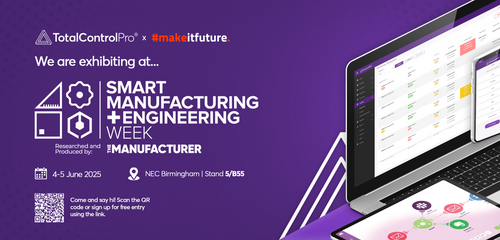
Makeitfuture are the leading AI & Automation agency in the world, offering expert consulting and solution architecture and design services, building multi-step AI Agents, custom integrations, and AI workflow automations, all focused on optimising end-to-end business processes. Trusted by leading platforms and clients across the world, makeitfuture are proud to be the #1 no-code team in Europe, Platinum Partners of Make, Gold Partners of Airtable and Zapier Certified Experts. Learn more about makeitfuture here: https://www.makeitfuture.com/ This partnership marks a powerful step forward in shaping the future of smart manufacturing. By bringing makeitfuture’s AI & Automation solutions and future-focused approach into the manufacturing world, we are enabling our clients to connect their existing ecosystems to DynamxMFG, delivering more intuitive, scalable, and future-ready manufacturing solutions. Makeitfuture will be joining us at The NEC, Birmingham for Smart Manufacturing Week 2025 on the 4th & 5th July. This event is a great opportunity to come and speak to our team about the benefits of integrating your current technology stack with DynamxMFG. RSVP for free entry to both days here: https://tinyurl.com/TCPro-SMW25 Discover how your manufacturing can benefit – click here to book a demo: https://totalcontrolpro.com/book-a-demo/
At its core, an MRP system ensures that the right materials are available for production at the right time, in the right quantities, and at the lowest possible cost. Benefits of using an MRP system Implementing an MRP system can transform the way a manufacturing business operates. From improving efficiency to reducing costs, here are the key benefits of using an MRP system: • Improved Inventory Management. MRP systems help maintain optimal inventory levels by accurately forecasting material requirements. This reduces excess stock, minimises storage costs, and prevents stockouts that can delay production. • Enhanced Production Planning. With real-time insights into material availability and production schedules, manufacturers can better plan their operations. This leads to more efficient resource allocation and fewer disruptions in the production line. • Make Data Driven Decisions. MRP systems provide real-time data and reporting tools that support informed decision-making. Managers can respond quickly to changes in demand, supply chain issues, or production delays. • Greater Supply Chain Visibility. MRP systems offer a clear view of the entire supply chain, making it easier to coordinate with suppliers, identify bottlenecks, and adjust to changing market conditions. • Scalability for Growth. As your manufacturing business grows, an MRP system can scale with it, handling increased complexity, larger order volumes, and multiple production lines without sacrificing accuracy or speed. Which MRP is the perfect solution for SME manufacturers? If you are an SME looking to grow and increase output, DynamxMFG is the perfect solution. Here’s why: • DynamxMFG is more than just an MRP system. It is a powerful, smart manufacturing tool which provides real-time tracking of people, products, processes, and performance within your manufacturing. • As you grow, so do we. DynamxMFG is designed for manufacturers who are outgrowing paper-based systems or Excel spreadsheets and want to take their manufacturing to the next level. • No need to ditch the old system. DynamxMFG connects easily with many existing legacy systems and accounting tools, like Xero, Sage 200 and QuickBooks, to name a few. • 90 Day Implementation. Our team of dedicated onboarding engineers is committed to getting you and your business set up on DynamxMFG in just 90 days, so that you see the growth quicker. Ready to optimise your manufacturing? Come visit us at Stand 5/B55!

MRP software is designed to streamline your operations and give you total control over your entire production process. In this post, we’ll break down five clear signs that your manufacturing company is ready to make the move to MRP software and why delaying that decision could be costing you more than you think. Frequent production delays don’t just frustrate your team, they can break customer trust, inflate costs, and impact your bottom line. Whether it’s due to material shortages, scheduling conflicts, or poor visibility into production timelines, delays are a clear sign that your current systems aren’t keeping up. Without an efficient way to coordinate materials, machines, and manpower, things can fall apart quickly. MRP software helps by automatically scheduling jobs based on material availability, lead times, and capacity. It provides real-time updates on where everything stands, so you can spot potential bottlenecks before they become major problems. By implementing an MRP system, you’re not just fixing delays, you’re building an agile production process that helps you hit deadlines consistently and keeps your customers happy. Inventory is either overflowing or running dry Striking the right balance with inventory is one of the toughest challenges in manufacturing. If you’re constantly overstocking materials you don’t need – or worse, running out of critical components mid-production – your business is losing money, time, and efficiency. Excess inventory ties up cash flow and takes up valuable storage space. On the other hand, running out of materials can halt production entirely, delay customer orders, and damage your reputation. These are classic signs that manual tracking or disconnected systems just aren’t cutting it anymore. With MRP software, inventory management becomes proactive and precise. It calculates exactly what you need, when you need it based on current orders, and supplier lead times. You’ll avoid unnecessary purchases, reduce waste, and keep production moving smoothly. Your team is drowning in spreadsheets If your team is constantly juggling endless Excel sheets just to keep production moving, it’s a red flag. While spreadsheets might have worked when your operation was small, they simply can’t scale with the complexity of modern manufacturing. From inventory tracking and production planning to supplier management and demand forecasting, relying on spreadsheets quickly becomes a bottleneck. Errors are easy to make and hard to trace. Version control becomes a nightmare when multiple team members are editing the same file. Worst of all, critical decisions are often delayed because no one has real-time visibility into what’s actually happening on the shop floor. MRP software eliminates these pain points by centralising data. It allows you to move away from reactive chaos and toward proactive planning, so your team can stop firefighting and start focusing on strategy. Forecasting feels like guesswork If your production forecasts are more gut feeling than data-driven strategy, it’s probably costing you. Whether you’re overproducing and tying up cash in excess inventory, or underestimating demand and missing delivery deadlines, inaccurate forecasting hits your bottom line from both ends. Without the right tools, forecasting becomes a risky blend of outdated reports, inconsistent data, and crossed fingers. Your team spends hours trying to scramble together insights from sales orders, supplier timelines, and historical trends, often without a clear picture of what’s actually coming down the pipeline. MRP software takes the guesswork out of forecasting by providing real-time visibility into your inventory, orders, and capacity. With integrated data and predictive analytics, you can anticipate demand more accurately, align purchasing and production, and make smarter decisions with confidence. Lack of visibility across operations is hurting efficiency When you can’t see what’s happening across different parts of your operation, it’s impossible to make informed decisions. This lack of visibility creates inefficiencies and missed opportunities at every level. Your production team might not be aware of supply shortages until it’s too late, and your sales team could be pushing products that aren’t even ready for shipment. Without a unified system, your departments end up working in silos, creating bottlenecks and delays. What’s worse, it’s often hard to track the root causes of inefficiencies, meaning problems persist or even get worse over time. MRP software breaks down these silos by providing a centralised, real-time view of your entire operation. From inventory levels to production schedules, everyone on your team can access the same data at the same time. This transparency improves collaboration, allows for quicker responses to issues, and ultimately boosts the overall efficiency of your operations. Which MRP system should I invest in? If you are an SME looking to grow and increase output, DynamxMFG is the perfect solution. Here’s why: DynamxMFG is more than just an MRP system. It is a powerful, smart manufacturing tool which provides real-time tracking of people, products, processes, and performance within your manufacturing. As you grow, so do we. DynamxMFG is designed for manufacturers who are outgrowing paper-based systems or Excel spreadsheets and want to take their manufacturing to the next level. No need to ditch the old system. DynamxMFG connects easily with many existing legacy systems and accounting tools, like Xero, Sage 200 and QuickBooks, to name a few. 90 Day Implementation. Our team of dedicated onboarding engineers is committed to getting you and your business set up on DynamxMFG in just 90 days, so that you see the growth quicker.