
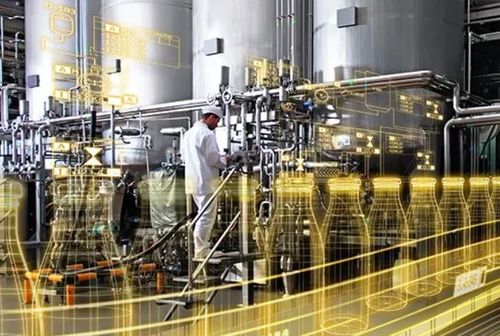
This webinar will focus on the full range of applications to the food & beverage market, from raw materials to packaging to finished-goods testing. We will cover everything from percentage-level macro-testing to trace-level elemental speciation. We will explore the range of techniques available, particularly AAS, ICP-OES and ICP-MS, and look at both liquid and solids analyses. Who is this webinar for? Any scientists, analysts, researchers or technicians involved in the analysis of food-related products. Whether it's exploring new technologies or learning more about the existing instrumental applications this webinar will be invaluable to you. When will this take place? This webinar will take place on Wednesday 3rd February 2021 at 10:00 and will last 1h30 approx. It will be run via Microsoft Teams Live. It will be a combination of a technical presentation and a live demonstration What will be presented? Examples and explanations of the importance of elemental testing in the food chain Comparisons of different techniques Live ICPMS demonstration of trace-level toxic elements in beverages We will also be running a live analysis session on our demo ICP-MS. Email Dan Clarke to register to attend this: dan.clarke@scimed.co.uk
Any management practice requires the definition of goals and indicators to control the company's performance. The goals express what is intended, and indicators are used to quantify these objectives in numbers. In Maintenance, the indicators are a set of information that measures the performance of certain tasks, systems, and teams. Indicators allow to evaluate the progression over time and define the path for continuous improvement. When companies define achievable maintenance indicators, they can increase their production, reduce costs, improve safety, and increase overall efficiency. Also known as maintenance KPIs (Key Performance Indicators) these indicators evaluate whether operations are aligned with the maintenance goals, like reducing downtime. As already mentioned, the maintenance indicators vary according to the objectives and strategies of each company. However, there is a set of KPIs that are used more frequently, which are based on the following key factors: Efficiency Costs and expenses Security and compliance Asset Performance Downtime Work order management Spare parts inventory management What is the main maintenance KPIs and how to define them? In most companies, defining and monitoring maintenance indicators is part of a process that begins with the objectives set by top management. Once these objectives are established at the company scale, the maintenance manager can define action plans for the department, in line with global strategies. To define the maintenance KPIs, the maintenance manager must identify the main negative points of the department. In this process, the areas that need to be improved should be considered, so that the team could improve the results. For example, the fact that there are several unexpected breakdowns in certain equipment, makes the maintenance team focusing much time on repairs. This is a point that must be worked on and improved. Additionally, to define maintenance indicators, managers must put into practice the SMART method (Specific, Measurable; Attainable; Realistic; Timely) the most widely used technique to evaluate an indicator. Below, you can see what they mean: Measurable – Must be quantifiable, preferably in numbers. Attainable – The goals must be realistic and within reach of the responsible. Realistic – A clear idea of the intended objectives must be available, considering current conditions. Timely – Determine previously a deadline to achieve the goals. Whatever the problem that prevents the company from achieving the defined goals, this is the first step you should take to improve efficiency and increase productivity. Generally, maintenance KPIs fall into the following areas, along with the most used metrics in each category: Work efficiency – Maintenance Backlog, overtime maintenance, machine setup time, percentage of emergency work, overtime and MTTR (Mean Time of Repair). Costs and expenses – Maintenance cost as a percentage of replacement asset value (RAV), maintenance cost per unit, utility consumption (per utility). Asset Maintenance – Planned Maintenance Percentage (PMP), Program Compliance, MTBF (Mean Time Between Failures). Safety and Compliance – Number of Accidents and Incidents Reported, Lost Time Injury Frequency Rate (LTIFR). Asset Performance – Overall Equipment Effectiveness, Asset Uptime Downtime – Percentage of production time, equipment downtime. Work order management – Average time to complete work orders, Percentage of work covered by work order Spare parts inventory management – stock-out, inventory accuracy, turnover rate Difference between metrics and maintenance indicators It is very important to keep in mind the distinction between KPI and maintenance metrics. Although they are similar, because both measure the performance of the company concerning the defined goals, establish ideal levels for the future, and work to achieve these goals, they are not the same thing. The main difference is metrics are a measure that calculates progress towards a goal and KPIs are the target numbers to achieve. This difference can also be verified by the names: KPI stands for performance indicators, while a metric, by definition, means a measurement system or standard. What is the importance of maintenance KPIs? Calculating and monitoring these indicators are very important for company managers to optimize processes and obtain in-depth knowledge to understand what goes less well and where there is room for improvement. Also, having access to accurate data automatically improves decision making. If you can meet the established maintenance indicators and monitor their evolution, it means you are more likely to have a reliable maintenance management system. Valuekeep CMMS is a great tool to include in your maintenance strategy. With this software, you can create work orders in digital format, control and monitor ongoing maintenance operations, create maintenance plans, and handle the work of technicians. Find out how Valuekeep can make it easier to consult and track your company's maintenance KPIs.

)
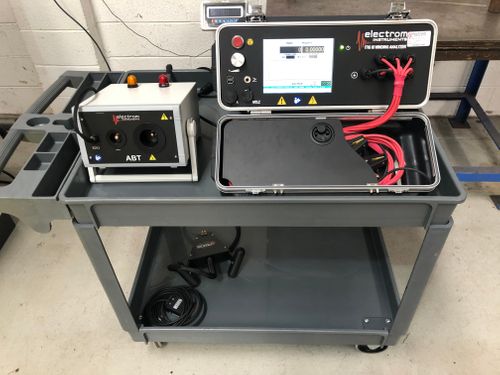
When looking for an Electric Motor Repair partner there are many different factors to consider, things like facilities, 24/7 service and capabilities. One of the factors that many are not aware of is the quality of the motor testing facilities of the repair centre. For example how does the repairer perform the test sequences to fully test the motor windings? If the repairer hasn't invested in quality test equipment there is a good chance that they can't 100% guarantee the quality of the motor windings. Electric Motors are complex pieces of equipment and they require the right type of infrastructure to carry out a repair correctly and to a high standard. Multi meters and insulation testers just won't cut it. You may be wondering how a full Electric Motor test should be carried out and what equipment should be used? At Neutronic we utilise the latest testing system from Electrom Instruments. In particular the model we opted for is the iTIG III Winding Analyzer, widely regarded as the most advanced motor test system available. The ITIG III features over 20 different high and low voltage tests including frequency surge and partial discharge. This unique test system allows the user to set up tests and run through them automatically eradicating any potential for human error. When coupled together with the DC commutator option, as can be seen at Neutronic the iTIG III can be also used to test DC Motors to the same high specifications. Test equipment such as the Electrom Instruments iTIG III Winding Analyzer don't come cheap, but it's the type of investment that will ensure that your electric motor is repaired to the highest possible standard. If you would like to learn more about how Neutronic provide world class Electric Motor repairs get in touch.



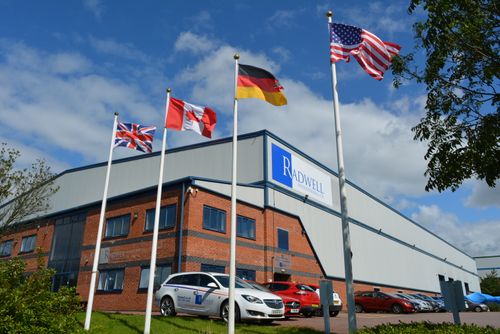
The awards celebrate the growth and creativity of the best businesses in Staffordshire and following a record number of entrants, Radwell were announced as three-time winners for their invaluable contribution to innovation, international trade and individual excellence during a challenging 12 months. Martin Keegan, Managing Director of Radwell said “As a manufacturing and factory automation specialist, we think locally as we do business globally and our innovative business strategy has enabled us to remain open during the pandemic as an essential business supporting manufacturers and food processors. To win the International Trade award and to be recognised for our hard work and commitment to the 55,000 customers we serve in 175 countries is a privilege.” Following extensive research into PPE products Radwell manufactured a door opening device that attaches to the bottom of a door with the aim of reducing contact with door handles. Branded as 'The RadStep-2020' the product is now sold globally and has won multiple awards for innovation. Martin Thomas, European Marketing Manager at Radwell said “Companies that grasp the innovation opportunity are among the most competitive and most productive in global markets. That's why innovation is the lifeblood of the UK economy and drives growth and success in the manufacturing sector. To recognise the achievements of extraordinary innovators, we are proud to have won the Innovation in Business award for 2021.” The Young Professional of the Year award recognises an individual for their hard work and personal achievement. Rosie Crowther joined Radwell in 2018 as Marketing Assistant after graduating from Keele University and was promoted to European Marketing Assistant in 2019. She is now responsible for the company's social media accounts, videography, blogs, events management, community outreach and award submissions. By posting relevant content and actively reaching out to influencers and business leaders across six social media channels within seven European countries, Rosie has organically grown connections and followers by 248% within the last 12 months. Rosie said “I am absolutely delighted to have been nominated and recognised as a rising star within Staffordshire and was up against tremendous competition. I feel privileged to have won the award however my job would not be possible without the support of my colleagues.” Radwell will continue to drive growth globally with innovative products and services that support the needs of their customers.
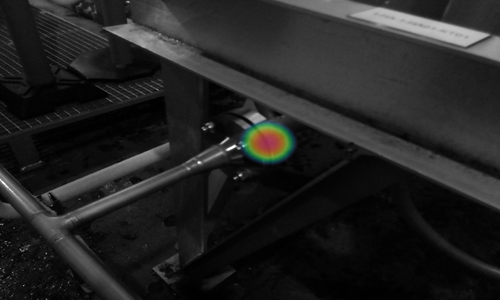
Esko Ryöppönen of ND Testaus knows how important his work is, as it can help save already compromised lives. Ryöppönen routinely inspects hospital piping for gas leaks that can be culprits or partly to blame for destructive hospital fires, which are a risk to patients' lives. Such important work requires the most reliable, efficient equipment. With this in mind, Ryöppönen always chooses the NL Camera. Leaks Are a High Risk in Hospital Piping The NL Camera for air leak detection is not just a tool for saving money on costly leaks. One of its applications is to increase hospital safety and protect patients' lives by detecting leaks in hospital pipe networks. These carry oxygen, compressed air, nitrogen for powering different instruments, nitrous oxide or laughing gas used as a sedative, and carbon dioxide that is utilized in some operations. “Hospital pipe networks are very critical”, Ryöppönen confirms. “Even the smallest leaks must be detected and fixed immediately because oxygen leaks especially are often a high-risk factor.” The NL Camera Finds Even the Trickiest of Leaks Ryöppönen remembers an incident where the camera was the only device that could find an uncommon leak in a hospital oxygen tank's flange joint. This particular leak type is challenging to detect and analyze since any leaking oxygen spreads into such a wide area. For this reason, the hospital maintenance personnel, who were using leak spray, did not believe there was a leak until they saw it on the camera screen and it was further confirmed by an oxygen sniffer. More common places where hospital gas leaks occur are the piping that runs above the ceiling, patient room plug sockets, operating room ceiling systems, oxygen tanks, and gas centers. Results, Swiftness, and Ease Lead to Success The main reasons why Ryöppönen trusts the NL Camera in his audits are how easy and fast it is to use. He appreciates that the camera shows leaks in a wide area without him having to direct the device toward a certain direction where he expects a leak to be, as he would do with older technology. Another feature Ryöppönen finds useful is the NL Camera's leak size estimate. This is thanks to the NL Analytics, which also further analyzes the detected faults in the NL Cloud. When asked about his first experience of using the camera, Ryöppönen smiles widely. “Starting to use the camera was easy: I just created an NL Cloud account, plugged in the battery cable, and got to work,” Ryöppönen concludes, laughing. He then continues finding gas leaks and improving hospital safety with the most effective solution on the market.