)
Would your business be more efficient if you could avoid costly, unexpected, repairs? In this webinar we will look at some of the key factors to consider in choosing a CMMS/CAFM solution. It is important to choose a system that will enable you to reduce repair and replacement costs with effective maintenance planning. Our experienced presenter will show you the importance of having control of your assets and maintaining visibility across your business. You should look for this in a CMMS/CAFM solution to ensure you can budget for replacing equipment and parts before problems occur. The result is better cost control and more efficient operations. The webinar will give an introduction to ShireSystem 4.0 and show how quick, easy and inexpensive it can be to increase the longevity of your company assets. Exciting new functionality includes a Wallboard module for a powerful way to share relevant, actionable data. We will also explore the Maintenance Manager system capabilities and how ShireSystem can provide business continuity whilst remaining compliant by providing details of costs and an audit trail. REGISTER HERE: https://register.gotowebinar.com/register/6521193981075082253
)
This webinar will look at the importance of a CMMS/CAFM system providing a broad capability, being scalable and having the ability to adapt to your changing requirements. It is not only important to ensure that the system you choose can meet your current requirements, but also to check it can adapt as you need it to. This webinar will outline the essential modules that can be added to the ShireSystem CMMS/CAFM solution, including: ShireSystem Stock and Inventory (Materials Management) facilitates the management of stock, enabling the user to organise, monitor and control movement at each stage of the receipt/storage/issue and return cycle whilst maintaining quality compliance. ShireSystem Work Requester is a cost effective and efficient module permitting users to submit and track work requests to the maintenance team. Work Requester is a simple method to request actions against an asset, contact, client or location. Plus a summary of other options that are available. REGISTER HERE: https://attendee.gotowebinar.com/register/3689385291063757069?source=Maintec+website

Sundown Products is a well-established manufacturer serving farmers and other customers with a range of products including high-quality cattle feed, horse and poultry bedding. Its 3-acre production facility in Huntingdon operates 24 hours a day, 7 days a week, turning straw into Nutritionally Improved Straw (NIS) bovine feed, smart bedding for poultry farming, and sweet-smelling horse bedding which received a Royal Warrant in 2002. It has always been committed to continuous investment and improvement. As part of this, MD David Cubitt decided that planned preventative maintenance was a smart investment and decided to install ShireSystem Computerised Maintenance Management Software (CMMS) to support its manufacturing process. Chief Engineer Mark Robertson is now leading this initiative and explained to us how the software is being used to help the company document and better manage its manufacturing. Over the course of the past year, he has actively worked with the software and towards continuous improvement and uptime, helping to drive a 30% increase in productivity. Feeding the production process The production plant operates continuously, taking in around 10 articulated lorries full of straw bales each day which then go through shredding and into two main production streams. One of these produces pellets, by cooking it to improve the digestibility and making it into a form which is easy to handle. The other line chops and de-dusts the straw, and the resulting bedding is treated with sweet-smelling eucalyptus oil before re-baling for equine use. This continuous process carries some risks, as Mark explained: “We have a critical parts list of essential machinery and process stages. From start to finish, processing the material may depend on up to 50 different parts of machinery – from gear-boxes to chains, clutches and rotary valves, mixers and pressers, augers and sieves, to bucket elevators and silos. If at any point any one of those break down, the plant simply stops.” Relying on the continuous smooth operation of every single asset within the manufacturing plant is therefore business critical, as he added: “If the plant stops suddenly and the system is full it will solidify incredibly quickly. If that happens, we have to dig it all out by hand.” Growing production plant knowledge To minimise the risk and cost of production downtime, ShireSystem software is being used to help Mark document every single equipment asset, part and consumable item on which the plant relies. He told us: “My aim is to list every single asset we have and put it onto the system. This is a mammoth task, but it's important because the plant is 25 years old and very busy, so its unsurprising that sometimes equipment goes wrong. But each incidence is a learning opportunity, as I get a better idea of our risks – we fix the problem, it is documented and put into the software.” Building the database has helped Mark start down the path to preventative maintenance management already: “By collecting information over the course of a year I've gained a good idea of how long each consumable item lasts. Now ShireSystem will flag up every morning anything that is about to wear out and needs changing, and I have a list of tasks for the day.” Once the information has been input once, it is there for reference – not only by Mark and the three engineers on shift in the plant, but for their successors in the future. “I want to leave here at some point in the future, safe in the knowledge that we have a good system in place, that someone can come in and easily take over,” he said. Better budgeting and visibility The ability to see what is ahead in order to budget better for maintenance and manage the inventory of spares and consumables are further advantages. Mark recognised these, saying: “Being able to see from the software what I need to do over the next six months means I can plan a comprehensive budget of what everything is going to cost me. In the past, I had no idea because I didn't know what might go wrong, but now I can budget for critical spares, for consumables, and for my labour needs.” The value of forward visibility is becoming even greater as productivity improves. Productivity has grown from six tonnes per hour to eight tonnes per hour over the past year, but sustaining this relies on continuous, problem-free manufacturing. Having more confidence in the system and its reduced risk of failure is unlocking some other cost benefits, as Mark outlined: “We've had to run at maximum to fulfil the products on the order book recently – but of course it all uses power. The pelleting plant uses the most electricity – it takes 700 amps per press – while the baling process uses a lot less power. With the increased confidence, we can now run the pellet plant at night, which means we pay half the price of electricity that we would during the day.” This growing confidence in trouble-free production is helping Sundown Products pursue its growth goals. It is also focused on innovations that will enable it to gain even greater utilisation from its existing production facilities. It has already brought to market a new poultry bedding solution which can be produced through the existing pelleting process, which de-odourises chicken droppings, and is selling by the tonne. It is now investing in introducing enhanced NIS feeds and bringing new products to market. More information For information on licensing terms and a quote to suit your needs, please call us on +44 (0) 2380 224 111 or email shiresystem@elecosoft.com
)
Xaar has created meters in ShireSystem and equipped maintenance engineers with tablets and the MobilePro application. They can now fill and close work orders on the move and monitor the usage of gases and liquid chemicals in real-time to enable planned procurement and schedule machine servicing to match actual production usage. Ian Rickwood, Project and Equipment Engineering Manager says: “We have used ShireSystem for nine years and we are still exploring all the integrated possibilities. It has already helped us plan, manage and understand our detailed maintenance scheduling, securing efficiencies and formalising our TPM processes to give greater accountability to the people responsible for checks. It helps us gain more efficient use of our resources, and it is moving us towards more effective planned preventative maintenance.” Xaar's precise manufacturing equipment incudes industrial lasers, deposition equipment and bespoke automation cells to create digital inkjet printheads for industry – and it is innovating in the rapidly-evolving market for printing functional fluids. Every piece of equipment must operate at peak efficiency and within incredibly tight accuracy tolerances. Even the smallest issue must be reported and addressed extremely rapidly, and the company uses ShireSystem to enable every employee across the manufacturing site to report faults fast from any location via standalone PCs in each area, including its clean rooms. Ian Rickwood explained: “We have enabled frontline reporting by giving everyone in the manufacturing area of the business easy access to the ShireSystem for fault logging. We can easily prioritise issues and despatch teams to fix them.” Processes require a vast array of specialist parts and consumables, some of which have long order times. Managing this inventory is a mission-critical process. “We are phasing out the time-consuming process of collecting measurements and inputting them into spreadsheets. Now we have created meters in ShireSystem that can be managed via a handheld tablet on the MobilePro app. Measurements go straight into the database, so our procurement team can monitor usage and re-order at the right time.” The efficiencies are mounting as Xaar extends the use of ShireSystem. “Now, teams are actively working on equipment, not sitting at PCs. We can also better manage equipment that has a limited lifespan due to the aggressive chemical liquids that run through them. The data in ShireSystem means we have better awareness of actual engineering time spent and apply meters to monitor the number of production runs – so we can schedule contracted service visits at the right time and within the terms of service agreements.” More information For information on licensing terms and a quote to suit your needs, please call us on +44 (0) 2380 224 111 or email shiresystem@elecosoft.com
)
Kingspan's largest facility in Holywell, Wales, has four independent production lines that are kept in service by a team of 23 engineers, mechanics and electricians. Any breakdown of machinery can quickly create problems. The Holywell site was the first site to benefit from ShireSystem, divisional Projects Engineer, Conor Evans is rolling out the software and says: “We knew that certain parts of certain machines would fail regularly, but we had no accurate records. At Holywell the team has been using ShireSystem to track machine breakdowns and parts failures for two full years, and now has lots of data. Engineers can now go in and change parts during scheduled maintenance or downtime, before a part fails in the middle of a production run. This is the biggest cost and time saving so far, and it increases our production line availability.” Nine sites in six countries across Europe and the Middle East are now using ShireSystem. Kingspan is moving towards a company-wide capability to plan maintenance and parts replacements in advance of predictable failures to deploy engineer resources more effectively and maximise both uptime and production efficiency. The nature of Kingspan's insulated panel production relies on the efficient operation of long, continuous production lines operating 24 hours a day. These take tons of rolled steel sheet, cut and transform it, introduce chemical foam and laminate the parts into individual panels to be bundled, packed and shipped. Failure of any part of any machine on the lines can cause production to grind to a halt, leaving steel in the machine damaged, and chemicals rapidly cooling. Divisional Projects Engineer Conor Evans told us: “Any breakdown risks the final product quality, but it also costs us money. With anywhere between six and ten operators on each line, idle time is a cost associated with machine breakdowns.” Two years ago, Kingspan commenced rolling out ShireSystem from Elecosoft to help the divisional engineering team implement planned preventative maintenance across the network and improve production efficiency. The Holywell site, which produces five million metres of panels annually, was the first site to go live; since then the system has been installed in eight other sites across the UK, Ireland, France, Dubai and Turkey, with Finland the latest to come on stream. Even though each site is at a different stage of implementation, it has already enabled the company to achieve valuable additional alignment in reporting: “Elecosoft helped us create our own custom reporting, and now all sites in Europe and the Middle East can produce the same custom preventative maintenance and breakdown report, so we can compare our maintenance performance.” The company's two sites in France, at Dunkirk and Perpignan, are successfully using ShireSystem: “Our two French sites are on the same ShireSystem installation not just because they share a language but because it makes sense for them to share their information, tasks and maintenance procedures for similar equipment. Now, when one sets up a preventative maintenance procedure for a particular piece of equipment the other can view the set-up and consider if they should do the same thing. It provides better linking of the sites when equipment gets the same treatment everywhere.” The sites in the UK and Ireland are at the forefront of exploring what ShireSystem can do. The Holywell and Sherburn sites are seeing how the ShireSystem mobile app can keep engineers connected. These are working with the Kingscourt site in Co. Cavan to make spare parts inventory visible between the UK and Ireland. “We are now well set up to share parts information between the UK and Ireland. Now that our systems are lined up, if someone is missing a key part in Ireland they can quickly see in ShireSystem if the UK site has it, and arrange for it to be shipped over.” Kingspan is leveraging its investment in ShireSystem to enable continuous improvement, which is proving attractive to additional sites as the proof of value accumulates. In summary, Conor says: “ShireSystem is a good system for scheduling work, tracking breakdowns, machine servicing and part inventory, and helping us compare sites on the same basis. It's because of these benefits we are starting to get enquiries to implement ShireSystem in other sites such as our second Finland facility and our Insulated Panel sites in Eastern Europe.” More information For information on licensing terms and a quote to suit your needs, please call us on +44 (0) 2380 224 111 or email shiresystem@elecosoft.com
)
Resource Planner is a powerful way to get a calendar view of your current and planned work. This webinar will showcase its features and show how it integrates seamlessly with the ShireSystem CMMS/CAFM system. We'll demonstrate how you can: Create shift plans Record staff availability Quickly reschedule work orders using drag and drop During the session, we will also show you ShireSystem Wallboard. A powerful way to visually share relevant, actionable data for your contractors, facilities and maintenance teams. With an up-to-date view of outstanding activities, it can help you comprehend and analyse leading performance indicators. Wallboard is highly configurable: the display consists of individual tabs to allow you to focus on specific locations, work types, businesses, contractors etc. The tabs can be set to rotate as required. This recent add on is designed to give maintenance and facilities managers a full ‘situation awareness' view of the maintenance backlog as well as current and outstanding current work for multiple maintenance teams, contractors and other members of staff along with their availability. REGISTER HERE: https://attendee.gotowebinar.com/register/7751136276272163084?source=Maintec+website
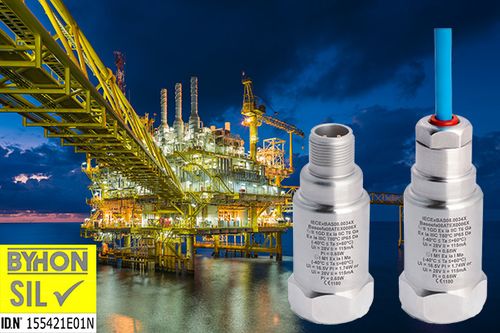
Hansford Sensors have received official Safety Integration Level (SIL) 2 and SIL 3 certified rating for our HS-420I and HS-422I Intrinsically Safe Transmitters. Assessed to the relevant requirements of IEC 61508:2010. SIL certification ensures operator and machine safety in hazardous environments, the 4-20mA transmitters meet the requirements of Systematic Capability, Hardware Safety Integrity and Random Safety Integrity. This series is ideal for direct use with PLC systems and designed for use in online vibration monitoring applications, where the environment contains inflammable gases, fumes, chemicals etc., as found in many industries such as mining, gas and petrochemical. The 4-20mA transmitters allow maintenance engineers to monitor vibration levels of pumps, fans, compressors, motors, conveyors, drilling rigs and all types of rotating machinery, which are in potentially explosive working environments.
)
We have expanded our range of ATEX and IEC Ex certified intrinsically safe 4-20mA vibration transmitters, ideal for direct use with PLC, BMS or other 4-20mA input modules. The most recent addition is the HS-421I and HS-423I series of transmitters now giving AC & 4-20mA output in certified areas. Sealed to a minimum of IP65 and certified for use in Group II (Petrochemical) applications. This ensures the safe operation of electrical equipment in dangerous areas. With their construction in stainless steel and the ability to withstand tough operating conditions, the transmitters offer reliability, optimum performance and long service in a range of hazardous environments. Available in a choice of either integral cable or connector, including tough braided cable, waterproof silicon cable, 3 Pin MS connector or M12 connector. For more information view the range of HS-421I and HS-423I datasheets on our website: www.hansfordsensors.com
)
The original design of electrical test instrumentation was often focused on taking a measurement and little else. A lot of the operation and interpretation was left to the operator. This was fine for people who liked the challenge or had experience. But it could be tough on apprentices, new hires, and those who were simply handed the instrument with no training. Constant improvement in instrumentation has addressed these problems by adding to the capabilities of the instrument. Some are for convenience, some safety and some the advancement in technology over the years that helps standardize testing and provide more accurate results. A prime example is that of insulation testers. Let's examine some of the key improvements in features and functions, and what they mean to the operator. Some control styles are still appropriate For field work, test instrument panels are best fitted with selector switches. This may seem old school to those who like modern devices, but while membrane switches work well for R&D work in a laboratory or shop, for field work the selector switch is more practical and produces less error. Remember, when working in the field, the operator's hands may be full or they may be wearing gloves. Although membrane switches are useful, they can be unresponsive or easily jump to the wrong option under these conditions. Another variable is that the operator may be distracted or called away, then have to re-establish where he or she is with regard to the options. A selector switch is robust, stands up well to rough field conditions, is easy to operate and readily shows what position it is in. Most important, it only requires a glance for a distracted operator to re-establish what the selected test conditions are. Changes in function and mode switches Let's take a look at two selectors that are staples of insulation testers: function switches and mode switches. Function switch Function switches on old instruments were limited to a discrete number of test voltages plus a continuity test, and possibly a kilohm range and/or a voltage check. The selector may have a flexible test voltage position. With this, the operator is able to set almost any test voltage across the whole range of the instrument. This could possibly be done in increments as tight as 1 V. If you need to test 600V wiring, it's no problem using an older tester. In addition, there is no need to make a choice between 500 V or 1 kV. The instrument can be set at precisely 600 V. This enables standards conformances to be met precisely rather than approximately, and greatly reduces controversy and disputes with customers, clients and oversight authorities. It also facilitates careful observation of the reaction of insulation to gradual increase in voltage by small increments, similar to a “tip up” test in high-potting, but without the destructive potential. Another position not found on old testers is Setup. Typically, if you go there you can then use arrow keys to scroll through every function that the operator can influence. First-time users will usually want to ignore this key, but once fundamental operation has become familiar, the setup menu affords options to make the testing quicker, and more precise. These available options are expanding all the time. Generally, horizontal arrow keys scroll through the options and up/down keys select values. Press a lock button and the selection becomes a permanent feature of the instrument until changed. Test time and pass/fail measurement beepers can be set. You may be able to select high or low test currents for continuity tests on either building-wiring or sensitive equipment. Convenience functions like backlight timer and sleep timer can be set to the operator's convenience and battery conservation. A terminal lockout voltage may be set whereby the tester will not engage if external voltage is present on the system or item being tested. This is a vital safety feature for both the operator and the instrument, and can be adjusted against the operating parameters of the system. When testing point-to-point around a system, a REL mode enables the operator to enter a base value and then view the difference between the base value and every subsequent measurement. Dedicated models for telecom/datacom applications afford additional convenience features. The capacitance per length of the tested cable can be set and then measured. The tester automatically converts the measurement to the length of the circuit and displays that. Some advanced testers will also have a button that rotates the measurement among tip, ring and ground. Three test leads can be connected and the three combinations...tip to ring, tip to ground, ring to ground...can be measured by merely pressing a button, with no need to change leads. Mode switch The other selector is the mode switch. This gives the operator the option of selecting a standard insulation resistance (IR) test, a timed insulation resistance test (IRt), a Polarization Index (PI) Modern mode and function switches on insulation tester test, a Dielectric Absorption ratio (DAR) test, a Dielectric Discharge (DD) test, a Step Voltage (SV), and a Ramp test. Let's explore what each of these tests does. Testing modes on insulation testers. When using an old tester, most tests need to be performed manually. The operator did each step individually and results were hand written on record cards. Of the above tests, the dielectric discharge and ramp tests cannot be performed manually at all, while the others required a lot more involvement, time and possible error by the operator. Insulation Resistance Test With a modern tester, the time that the resistance test is to run is a ‘set and forget'. The operator can set the test then perform another task, like working on something else or taking a break. The test will run continuously for the prescribed time, terminate automatically and all data will be retained. Polarization Index Test The polarization index is a reading taken at one minute divided into a reading at ten minutes. Modern testers may provide the ability to adjust these times for convenience, although any other interval cannot properly be termed a PI. The resultant ratio is a fi gure of merit that frees the operator from having to interpret resistance readings, which can range from Megohm to Tera-ohm values. In strong insulation, the tester measures mostly charging currents, which are part of the insulation structure. As they charge, they diminish, and readings go up. Deteriorated insulation, by contrast, will pass leakage current to ground, lowering the reading. If the PI is low, it means the tester has measured a comparatively large amount of leakage current and the automatically calculated figure of merit will alert the operator. Dielectric Absorption Ratio Test DAR is just PI with shorter time intervals; 30 seconds divided into a minute or one minute into three. The principle and results are the same as for PI, but are an accommodation to newer insulating materials that do not have as long a time signature due to composition of enormous cross-linked polymeric materials. The DAR time can be adjusted. The shortened time will often provide a measurement that a PI will over-range before the 10-minute mark, thereby providing no figure of merit as there is no second number into which to divide the one-minute reading. Results of Polarization Index test on MIT1025 10kV insulation tester Dielectric Discharge Test DD is a complex test that cannot be performed manually. Unlike all the others, it measures the DIS-charge current after the test item has been fully charged in an insulation test and then the test voltage terminated. This is called relaxation current, where the structure of the insulating material reverts to its more random pattern once the dc voltage gradient of the test has been removed. Like PI and DAR, it calculates a figure of merit. Its prime function is to alert the operator to a faulted layer between perfectly good layers of a multi-layered insulation. Step Voltage Test Rather than applying a steady test voltage, step voltage increases it automatically in regular steps. Typically, the operator enters the top voltage and the tester automatically divides this into five one-minute intervals. This could be done manually with a watch and turning up the selector switch, but an automated SV has numerous advantages. As the voltage increases, the resistance should essentially hold. Deteriorated insulation...especially old, dry and brittle...will pass increasingly more current as smaller cracks and other imperfections are exploited, and so the resistance will drop notably with each step. Ramp Test The Ramp Test is a sophisticated SV, where the test increases steadily one volt at a time instead of by quantum leaps. It helps to have a practiced eye to interpret a ramp test, but one hopes to see a smooth and steadily rising resistance curve versus time. Deviations from smooth curve can give the experienced operator valuable insight into the nature of insulation damage and deterioration. Advances of modern insulation testers. With these advanced capabilities, a modern full-featured insulation tester provides much more information more quickly, accurately, and reliably than older single-function testers. Gone are the days of manual timing, record keeping and fewer available tests. While modern insulation testers still require training to use them properly and accurately interpret results, advances in controls technology has helped drastically reduce human error in testing.

With a growing focus towards enhancing and monitoring the operational performance of rotating electrical machines, Nanoprecise Sci Corp is delighted to announce our partnership with Quartzelec Limited ! Click on the link to read more about this exciting collaboration: https://nanoprecise.io/nanoprecise-teams-up-with-quartzelec-an-independent-multi-disciplined-service-provider/ With a growing focus towards enhancing and monitoring the operational performance of rotating electrical machines, Nanoprecise Sci Corp is delighted to announce our partnership with Quartzelec Limited ! Click on the link to read more about this exciting collaboration: https://nanoprecise.io/nanoprecise-teams-up-with-quartzelec-an-independent-multi-disciplined-service-provider/

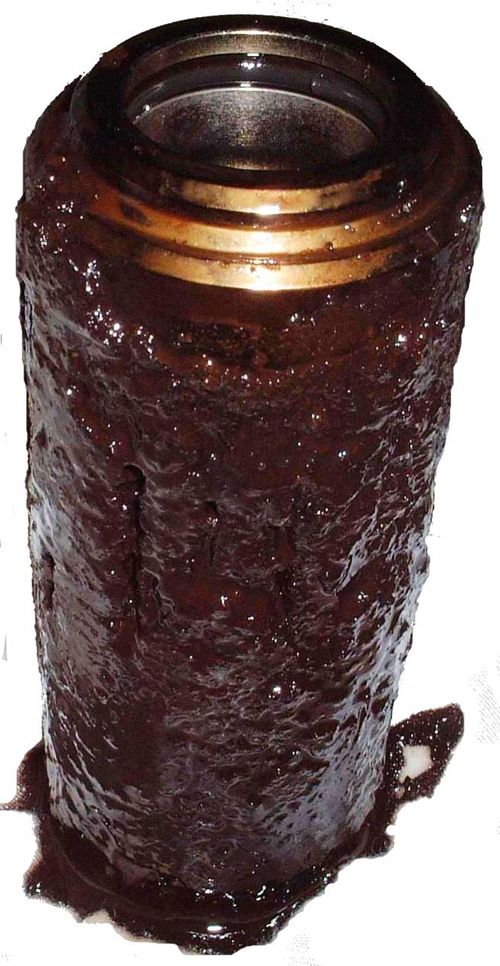
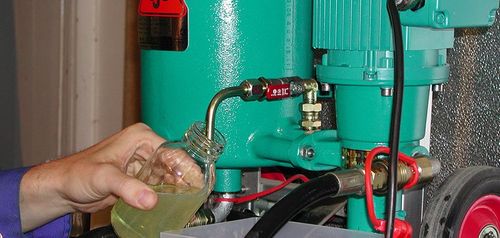
A webinar describing the consequences of having dirty oil, how it can make sever damages to machinery components with risk of system breakdown. We also introduce you to why you can not rely only on your inline pressure filter and why the cellulose based depth filtration technology is more efficient than other media on the market. Presented by our Corporate Trainer and Noria Partner Mr. Steffen D. Nyman. View here: https://youtu.be/0eKM9TtnRQI