


.jpg/fit-in/500x9999/filters:no_upscale())
The Future of CM is Changing, you will no longer have to rely on a service engineer coming to site to capture a screenshot of data and hope that Gearbox, Motor or Roller bearing is operating under the same process conditions as it was in the months previous. Changing process conditions whether it is a variable speed machine or due to the product in production are some of the biggest challenges CM Engineers face when diagnosing a potential fault. If our process conditions are different each time, we test it can be difficult to build up a reliable trend. It's rule 101 of any school lab test, keep test conditions consistent with few to no variables. With production taking priority it is unreasonable to expect test conditions to be consistent from month to month. If you hire a Condition Monitoring company to monitor your critical assets on a monthly basis it is most likely that you will getting somewhere in the region of 12-24 vibration readings for the year. Often supported by periodic oil sampling, thermal imaging and various other CM techniques. While this is obviously great cover and may be the most appropriate means of monitoring for your site there are now more options available to maximise your investment to make your Condition Monitoring Programme more effective. Wireless Sensors can be programmed to take a reading every hour or scheduled not to collect if you know your machine is going to be offline for a maintenance stop or product change. We will also continue to supplement this service with the additional CM techniques required but you can already start to see the benefits. More data means more knowledge of how your asset behaves when running different process conditions. Benefits of Wireless Sensors: 24/7 Monitoring Live alarm alerts to an app or web-based platform Email alerts straight to your phone Easy to Install Enhance Safety If you think you are ready to step into the future of CM please get in touch and we would be delighted to discuss this offering with you in more detail and help you to increase machinery efficiency and reliability.
)
Neutronic Technologies Ltd has been established for 20 years providing Electric Motors, Pumps, Gearboxes, Variable Speed Drives and Industrial Automation to the UK's manufacturing industries. We have vast experience across a varied number of industries such as Aerospace, Automotive, Food and Beverage, Brewing, Textiles and Chemicals. We believe the key to great repairs is having a motivated team of exceptional engineers who work together to help the customer, not to mention testing facilities which are among the best in the business. This is why we continuously invest in our people and test facilities ensuring that they are always continuously improving. Over the years we have developed our business to provide maintenance and repair services to all sorts of industrial equipment. Today our 10,000 SQ FT facility houses a state-of-the-art electronic workshop with engineers who can repair down to component level on any type of industrial electronic item, from variable speed drives to servo drives, PLC's and HMI's. Additionally, we have a well-established mechanical workshop that specialises in repairing Pumps, Motors, Servo Motors, Gearboxes and Fan units. Our workshops are open around the clock to support the UK's largest manufacturing companies, 24/7.
If pressure equipment fails during operation, it can seriously injure or even kill people nearby and cause damage to property, which is why the Society is now offering a 25 per cent discount on its popular ‘Certificate in Understanding the Pressure Systems' Safety Regulations' training course at https://rebrand.ly/BCASPSSR (available to customers of BCAS members only, excluding trade). The blended learning workshop, one of a number of specialist training courses in the Society's portfolio, covers the written scheme of examination in relation to compressed air systems. It provides knowledge of the Pressure Systems' Safety Regulations (S.I 2000 No 128), related standards and codes of practice and is designed to provide the understanding required as a user, manager, or provider of written schemes of examination. According to the latest statistics from the Health and Safety Executive, although reportable workplace accidents in manufacturing continue on a downward trend, there were still 15 fatal accidents in 2019-20, with 13 per cent of these as a result of exposure to an explosion. As a result, the HSE states that ‘everybody operating, installing, maintaining, repairing, inspecting and testing pressure equipment should have the necessary skills and knowledge to carry out their job safely', meaning suitable training is essential. In particular, a written scheme of examination is required for most pressure systems, which should be drawn up (or certified as suitable) by a competent person – and the system should not be operated or hired out until the scheme is in place and the system fully examined. One such company to have benefitted from the PSSR training course is BCAS member, Cambs Compressor Engineering Limited, who has recently trained its team using the mix of online learning and virtual classroom teaching. Based in St Ives, Cambridgeshire, the company has been a BCAS member since 1996. Managing Director, Mark Fryer is a firm believer in the importance of continuous training of his sales and service engineers, having worked his way up from an apprenticeship at an early age and experienced the benefits of personal and professional development firsthand: Mark explains: “It is really important to our business that our team is trained fully in all aspects of compressed air safety and performance if we are to offer consistent advice that can help reduce costs and improve safety for our customers. “This is particularly the case when it comes to the PSSR regulations, which have such a direct impact on the safe and efficient use of pressure systems. So, when BCAS launched the new PSSR course, we were really keen for our engineers to take part and gain this valuable CPD-accredited certification, to help support the written scheme of examination service that we already offer to all new customers. “The blended approach has been an excellent way of learning for our teams. An online e-learning module allows each engineer to train at a pace that suits, supported with the virtual classroom sessions where delegates come together to interact and learn from each other, before the final online examination. “The BCAS training courses are proving an excellent way for our employees to supplement their learning and to achieve a verified qualification.” As well as benefitting from the PSSR certificate training, Mark and his team have also undergone the ISO 8573 air quality standard course from BCAS, which is also delivered through a blend on online and virtual classroom sessions. To find out more about the Certificate in Understanding the Pressure Systems' Safety Regulation training course from BCAS and to book a place, please visit https://rebrand.ly/BCASPSSR For further information, contact your local BCAS member, email training@bcas.org.uk or call 0207 935 2464.

Throughout April, the Society is offering businesses the chance to purchase two of its popular Certificate in Working Safely with Compressed Air workshops for just £48 – and is continuing to offer an additional 25% discount for customers of BCAS members too (excluding trade customers)![1] Compressed air is a safe and reliable form of power, accounting for approximately 10 per cent of all the energy used by industry. However, it is important that both employers and their employees know how to work safely and understand the risks involved if good practice is not followed. The one-hour, online workshop helps to fulfil employers' health and safety obligations and provides evidence that each participant has understood safe working practices and their responsibilities. Straighforward and easy to follow, the course covers the hazards of compressed air as an energy source, the use of personal protective equipment, employer and employee responsibilities with respect to health and safety when using compressed air and a list of safe working practices to be followed. Vanda Jones, BCAS Executive Director added, “BCAS is recognised within the industry as a provider of training and development for engineers, technical professionals and users of compressed air. Working with our members we develop training based on industry standards and best practice. These include specialist courses that are tailored to the needs of industry professionals, end users and suppliers; that combine the safe working and understanding of compressed air with its multiple uses. “Now, more than ever, this training must be delivered to suit the needs of a dynamic and changing workforce. It's why we have invested in our new e-learning portal, allowing delegates to learn at a pace, and from a location, that suits – and the one-hour, Certificate in Working Safely with Compressed Air is a great place to start!” To find out more about the Certificate in Working Safely with Compressed Air course from BCAS and to benefit from the two-for-one offer, please visit www.rebrand.ly/BCASWSWCA For further information about the additional 25 per cent discount, contact your local BCAS member, email training@bcas.org.uk or call 0207 935 2464. [1] The free associate membership and 25% discount offer is only available to end-user customers of BCAS members. Trade customers are not eligible for the offer.
)
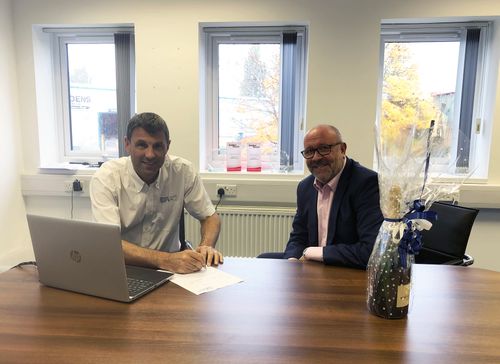
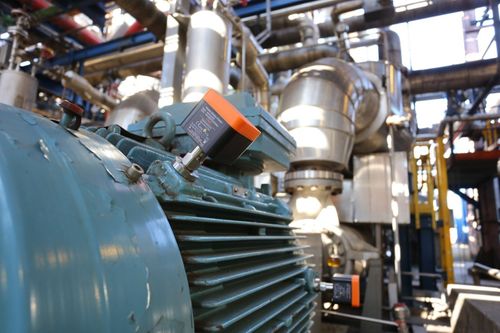
I-care is introducing “Wi-care as a service” as of now. This makes the industrial service provider the first organisation to offer wireless vibration monitoring as an OPEX solution. With the new service, I-care wants to make it easier for firms to implement Industry 4.0. Earlier market research carried out by I-care shows that many organisations are now ready for the transition to Industry 4.0. “We believe in a model that offers clients the possibility to implement new technologies quickly,” says Pieter van Camp, CCO of I-care. “Our research indicates that many parties would very much like to finance the changeover to wireless vibration monitoring in a different way. For a large-scale implementation, in particular, where tens of thousands of installed machines sometimes have to be taken care of, an OPEX-based delivery model is far more attractive.” Data Within Wi-care as a service, data plays a key role. In the first instance, I-care helps organisations select a data collection method that is optimal for them. Data analysts then turn the data into useable information and KPIs, which clients themselves can consult on a visual dashboard. Van Camp states: “Thanks to these data reports, clients can act proactively, reduce costs and increase uptimes. Given that Wi-care as a service charges according to use (including hardware, installation, analysis, reporting, support and guarantee), clients need to reserve far less capital.” Challenges The implementation of wireless monitoring has seen many obstacles, including the need for capital, the adjustment to infrastructure and upgrades to the most recent technology. Van Camp opines: “In addition, the monitoring of services, the reliability of surveillance equipment as well as the quality of analysis and service provision bring with them the usual challenges. By virtue of the OPEX model, our service is not only reliable but also easy to scale up.” More information: https://www.icareweb.com/en-us/business-challenges/ About I-care I-care is a leading global service provider specialised in predictive maintenance and reliability. Headquartered in Belgium, I-care advises its industrial clients on their asset health strategies, helps them implement, embed and maintain those strategies and guides them in the transition to Maintenance 4.0. I-care also helps them collect, organise and analyse data worldwide in order to optimise industrial efficiency. For more information, visit its website at https://www.icareweb.com/.
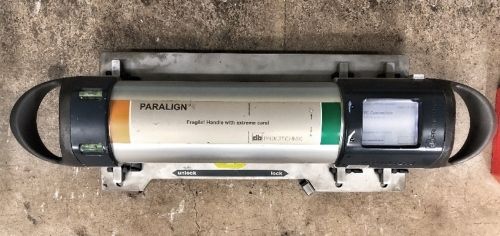
Fluke Reliability’s alignment team traveled to a client’s corrugated board production plant to perform an alignment service on a corrugator machine. Implementing a new methodology that required using the Pruftechnik ParAlign Roll Alignment system in combination with a Faro Laser Tracker, the team measured the entire wet-end, encompassing 126 rolls, and all 15 hot plates in a single weekend. Adding the Faro Tracker applications to the ParAlign procedure gave the Fluke Reliability Service team the resources to provide a comprehensive alignment, as opposed to more limited conventional alignment methods. Figure 1. Corrugated board production. Illustration by Fefco.org About the ParAlign technique The ParAlign device encompasses three ring-laser gyroscopes positioned in the x, y, and z directions, respectively. The gyroscopes, a product of Honeywell, are often used in military aerospace/aircraft applications. The gyroscopes measure the roll, pitch, and yaw of the ParAlign device as it is swept across the circumference of the roll. A minimum of 20 degrees of sweep is needed to measure the center axis of the roll. As points are collected along the arc, the corresponding software will equate an angle through geometrical equations and utilize the length from bearing to bearing of each roll to determine the horizontal and vertical offsets. The graphical, easy-to-interpret reporting format allows mechanics to easily understand what adjustments need to be made and to then properly make the corrections with precision shims and dial indicators. Each roll measurement takes roughly 30 seconds, which allows entire machines to be measured in less than six hours. Figure 2. The Pruftechnik ParAlign Roll Alignment system The reporting is a two-dimensional representation of the parallelism of rolls relative to the reference rolls. For the corrugator industry, the reference is typically referred to as the bottom preheat of the triple stack. As an example, Figure 3 displays three measured rolls with their respective vertical and horizontal offsets. The blue roll indicates the reference roll. The green circle represents the operator side of the machine and the red circle represents the drive side. Interpreting the results, the roll on the right is positioned 0.069″ high and 0.001″ left of the reference roll on the operator side. To adjust this roll, one would adjust the operator side of the roll down 0.069″. Additionally, if an adjustment is only available on the drive side, a 0.069″ shim can be placed under the drive side bearing of the roll to correct the misalignment. Figure 3. ParAlign reporting example of three rolls with vertical and horizontal offsets. The software can change the reference roll at any time to show all relative offsets to the newly selected roll. In particular, this comes in handy when observing the misalignment in certain sections, such as modul facers with corresponding splicing units. Contact Us If you'd like more information on Pruftechnik, click here to go to the Contact Page. Click Here In-depth description of the corrugator alignment service The wet-end of the corrugator housed a total of 126 rolls, all of which were measured within the first five hours of Day 1. The crew spent the rest of the first day making adjustments to 37 of the rolls found to be initially misaligned. The rolls were adjusted by the in-house maintenance staff to the tolerance of +/- 0.030″ in the vertical and horizontal directions. The ParAlign segment of the service involved measuring all rolls located within components from the double backer to the first splicing unit. Of the 89 rolls measured, 45 were adjusted and re-measured to determine final position. The rolls were adjusted to achieve a tolerance of +/- 0.030″. The rolls that were not able to meet the tolerance were either constricted due to a pre-existing framework layout or bolt-bound conditions. Major adjustments included lifting the operator side of the tail pulley framework roughly 0.150″ to align the beginning of the double backer to the bottom preheater of the triple stack. Once this adjustment was completed, the team used the Faro Laser Tracker to measure the leading edge of the first hot plate and the trailing edge of the last hot plate to cultivate an ideal plane to use as a reference for the hot plate alignment. Figure 4. The Faro Laser Tracker. The objective was to align the leading edge of each hot plate so that it lay no more than 0.010″ below the previous plate. Initial measurements of the plates indicated that the plates did not gradually incline as they should, but rather, they drooped in the middle to form an arc. This data was collected by measuring each corner of each hot plate and relating its position to the generated ideal plane. Correcting the misalignment required some plate corners to be adjusted over 0.100″. The alignment of the plates can be viewed in the corresponding images below. Figure 5. Initial hot plate measurements taken with the Faro Laser Tracker Figure 6. Final hot plate measurements (after adjustments) Figure 7: Screen capture of initial ParAlign results. The green circle represents the operator side of the machine and red represents the drive. All offsets are relative to the reference roll (labeled blue). In such an image, one can easily understand the amount of misalignment present as the more red that is seen, the more misalignment there is. Figure 8. Screen shot of final ParAlign results (after adjustments). After adjustments were made, each ‘moved’ roll was re-measured to show new positioning. Observing the amount of red that has been removed from the image makes it possible to determine how much misalignment was corrected. Conclusion Performing this alignment across the corrugator yielded improvements, including eliminating wrinkle problems, twist warp, and delamination or bonding issues. The client saw a noticeable difference in machine performance and product quality. In addition, the board now lay flat across the machine, using less starch with minimal adjustments needed.
Backup power generators often called “Gen Sets” such as those found in hospitals, water treatment plants or even where temporary power is required are often maintained by routine “interval based” servicing whether or not the unit is subjected to a high or low workload. Interval based maintenance normally involves costly oil changes (both in cost of the new and cost of disposal of old oil). Quite often the condition of the old oil is still fit for purpose, but conversely, sometimes the oil had probably degraded beyond fit for purpose before the service interval had arrived. Both scenarios are unwelcome as getting rid of “good” oil is costly and wasteful, but running an engine lubricated by poor oil is obviously detrimental to that engine’s health. Utilising the Spectro Scientific Fluidscan and Minivisc portable, battery operated oil condition tools, Field Service technicians can rapidly and accurately determine the current condition of a fluid (engine, gearbox or hydraulic) within 5 minutes of drawing a small sample (<1ml) right there at the side of the asset in question. No chemicals, or solvents are used, real “lab quality” results are displayed (with ASTM method compliance), but an easy to see “pass/fail or caution” message is also displayed The Minivisc quickly determines the fluid’s kinematic viscosity at 40 degrees C, whilst the Fluidscan determines multiple oil condition parameters such as TBN, TAN, Oxidation, Nitration, Sulphation, Soot, Water and Glycol. Results are stored on the device but can be uploaded to database software once the Technician is back at base for asset trending and reporting. These advances in oil analysis technologies has resulted in portable oil monitoring tools being available to field service personnel. Also, those managing fleets of engine generators (standby or even landfill gas) can easily implement a condition-based oil change regime so that operating expenses can be lowered by reducing unnecessary oil change waste and the prevention of catastrophic failures due to degraded in-service oil. SciMed are the distributors for Spectro Scientific in the UK and Ireland and offer a complete sales, service and support for all products. See us at Maintec 2020/21 Stand M80. www.scimed.co.uk/product-category/oil-condition-monitoring/
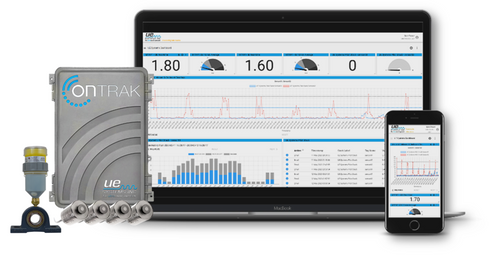
OnTrak SmartLube - Remote Bearing Monitoring and Precision Lubrication from anywhere, anytime The OnTrak SmartLube from UE Systems is a 24/7 bearing monitoring system which allows users to lubricate bearings remotely and from any device - saving 95% of the time required for optimal bearing lubrication. Over 80% of premature bearing failures are caused by lubrication issues. The SmartLube eliminates most of these failures by constantly monitoring bearing friction. The systems will know exactly when to lubricate and how much lubricant is needed. The SmartLube will then dispense the correct amount of lubricant. Reaching lubrication excellence is no longer a time-consuming task – you can now lubricate your bearings remotely and from any device. And because the OnTrak SmartLube monitors the bearings’ friction levels, it acts only when they need lubrication, and using the right amount of grease. Lubrication excellence was never so easy and quick. https://www.youtube.com/watch?v=ciproUccDKs&feature=emb_title Remote Lubrication Assistant Watching over your bearings 24/7, notifying you when lubrication is required. When called upon, the assistant will lubricate the bearing with precision using friction as its guide and with ultrasound best practices in place to eliminate over greasing. Bearing and Lubrication Database Stores all of the bearing and lubrication specific details including bearing type, size, grease type, and calculated lubrication interval and quantity. Automatic Documentation of Key Lubrication Insights Calculates key lubrication insights that help improve your lubrication program. Insights like quantity of grease used, time between lubrication cycles and resulting change in friction. Manual and Automatic Greasing Modes With two options to remotely grease your bearings, you are in complete control of your lubrication program. Advanced Learning Using the bearing and lubrication data combined with the key lubrication insights, the OnTrak uses intelligent learning algorithms to learn over time the idea lubrication needs of each specific bearings. Automatic Work Order Creation Integrate with your existing CMMS or ERP system to automatically document that lubrication has been performed and the key insights. More info: https://www.uesystems.com/smartlube/
Valuekeep is a technological company specialized in developing and marketing maintenance and asset management software for the global market. The company has announced a new Valuekeep, a more modern, intelligent, sophisticated, and faster CMMS software. The rise of new technologies combined with the imminent need to modernize facilities and maintenance departments has led Valuekeep to launch a new generation of cloud software, representing a disruptive evolution of its current offering. Valuekeep software is now an intelligent and technically advanced maintenance solution designed for companies of any sector, activity, and size, which contains innovation in its DNA and follows the latest market trends. In addition to all the functional scope required of a maintenance management software, this solution provides intelligent functionalities, such as accurate insights about the actual asset condition, work order status, and availability of materials, among others. These features help maintenance departments and facilities to organize processes more intelligently. With this technological support, the software help maintenance managers make the right decisions and improve technical teams’ productivity. Also, Valuekeep allows companies to integrate the maintenance area with any other company system, from PLCs and HMI sensors, IoT platforms, control systems, and ERPs. These integrations allow to collect and share data between the systems to automatically trigger the work based on the use of the equipment in real-time. Another innovation of the new Valuekeep is intelligent dashboards. These highly advanced dashboards contain several performance indicators, which allow managers to access the essential maintenance metrics over time. All these features are critical for companies looking to modernize operations and enter the digital age to remain competitive in the market. The Valuekeep solution represents a technological leap for the company, to bring the most intelligent and intuitive software to the world of maintenance, to simplify the maintenance operations of companies. For the near future, the company plans to include Augmented Reality technologies and Predictive Maintenance strategies in the solution, which are already under development. “Almost five years after launching Valuekeep, we have now introduced a brand new maintenance software to the market. The new solution is built on an innovative technological platform allows us to take a leap forward and be at the forefront of the maintenance management solutions of the future,” says Luís Cadillon, Valuekeep’s Managing Director. The company has rebranded and given a new look to its image to follow the latest software launch. Valuekeep now has a new website and a more interactive Help Center, fully integrated with a support area developed to simplify the entire customer support process. About Valuekeep: Valuekeep is a company dedicated to the development and marketing of maintenance management software (CMMS). The company was created in 2016 and has a team of professionals with extensive years of experience in the Information Technology and Maintenance Management sector. With the combination of advanced technology and know-how in the maintenance field, Valuekeep’s mission is to provide the most intelligent, simple, and innovative maintenance software to make maintenance work even more manageable, faster, and agile. Get to know the new Valuekeep at https://valuekeep.com/
)

Radwell can help your business proactively manage obsolescence by improving reliability, managing risks and preventing machine-down situations. The product life cycle of a technical system is often longer than the availability of spare parts. Everyday manufacturers around the world discontinue products, so end of life is announced and with it support ceases and the risk of a defective component increases. By planning for obsolescence we can help you create a long term strategy that includes support, replacement parts and repairs. Our comprehensive analytical reports provide a real time view of the inventory of automation assets at your plant and their value. Through graphical representations of data we give clear lifecycle status updates including active, phased out and obsolete parts. These are coming to, or have already seen their end of life, and are no longer supported by the manufacturer. Learn more > https://catalog.radwell.co.uk/radwell/obsolescence-management-paperturn?pid=MTI120447
)