

Smart tech firm Sauce has launched an innovative solution to enhance operational efficiency for one of the world’s biggest food and beverage companies. The technology developed by Sauce is aimed at solving complex yard management challenges for confectionery and beverage manufacturer Nestlé. The unique system is being used to track and manage all trailer movements at the firm’s York factory, where products such as KitKat and Yorkie are manufactured; and at its Regional Distribution Centre, where products such Nescafé and Smarties are dispatched. After being successfully introduced at the York site, the solution will now be applied to a revolutionary new distribution centre in the East Midlands, known as the Digital Distribution Operation of the Future. The multilingual system could then be rolled out to other Nestlé operations internationally – the business operates more than 400 factories in over 80 countries. Sauce, which is based at the Centre for Digital Innovation (C4DI) tech hub, in Hull, was approached by Nestlé to develop a bespoke yard management system to monitor and manage trailer movements. The system is used to improve the visibility and tracking of movements of drivers, vehicles and trailers. Previously, lorry drivers coming to the York site would drop their trailer off at the warehouse to be unloaded, then remain in a waiting area until it was ready, or collect a previously loaded trailer. Communication was via two-way radio or walkie talkies and the recording system was largely paper-based. Under the new system, all delivery drivers now input their details digitally upon arrival at security, including their name, vehicle and trailer numbers. They then wait in a designated area where they can view a “flight board” – similar to an airport or train station information screen – enabling them to monitor the status of their load. When it has been loaded or unloaded, they can return to their vehicle and leave the site. Shunter drivers, who manoeuvre delivery trailers on and off-loading bays at the warehouse and factories, also access the live information via a tablet in their cab, meaning they are fully aware of all movements on site. Sauce Chief Executive Matt Weldon said: “To have a company the size of Nestlé put their trust in us to deliver this system is huge for us and we are incredibly proud to work with them. “They have an amazing logistics operation and we’re delighted that we have been able to provide a further digital dimension to it. We have been able to provide Nestlé with the enhanced level of visibility they wanted as part of scalable solution that can be applied to any of their sites. “Nestlé had looked at various off-the-shelf shelf yard management systems, but none suited their requirements. That’s where we came in. We worked closely with Nestlé to understand exactly what they needed and to create a completely bespoke solution.” Sauce has created five programs to meet Nestlé’s requirements – a booking system; a traffic management system; a warehouse tracking system; a shunter tablet app; and a live flight board – which work seamlessly together. The system can be accessed currently in 16 different languages, with contract drivers of many different nationalities visiting the York site daily, and more can be added as required. “We have effectively created a suite of applications which can be turned on or off as necessary, based on the particular needs of a given factory or warehouse,” said Sauce Lead Developer Joe Axon. “This scalability means it can be used at any of Nestlé’s sites. “The system has evolved over time as we have developed the software, using our agile methodology. A key point is that, throughout the process, we have worked really closely with Nestlé, and will continue to do so, to ensure the technology we create meets their needs exactly.” Founded by three friends just four years ago, Sauce has grown rapidly to become an award-winning team of 30, who are currently working seamlessly from home as they continue to support clients through the coronavirus crisis. The Sauce team specialises in working with large, traditional companies as their digital partners, creating solutions to key business challenges and enabling corporates to keep ahead of the technology curve. Other major Sauce clients include home heating provider Ideal Boilers and wind power global leader Siemens Gamesa. York is the home of Nestlé’s UK confectionery business, incorporating factory and warehouse operations, as well as a leading research and development centre for confectionery. Around 500 trailers leave the site every week, transporting goods to major supermarket chains. Following its launch in York, the system developed by Sauce will now be implemented by Nestlé and its strategic logistics partner, XPO Logistics, at the pioneering Digital Distribution Operation of the Future. The futuristic distribution centre, at the East Midlands Gateway development, near Castle Donington, in Leicestershire, is billed as one of the most advanced buildings of its kind in the world, with its digital ecosystem integrating predictive data and robotics. The digital yard management system created by Sauce will now be a key element of operations at the flagship centre, which is due to open next month. Chris Pickles, Own Fleet and Delivery Operations Manager at Nestlé’s York centre, which operates 24/7 for 364 days of the year, said: “This site is one of the most complex of Nestlé’s operations because we have both factory and warehouse functions on the same site – usually it is one or the other. “This will solve key issues for the York site, which means it will also work for other operations. If any other Nestlé factory or warehouse wants an advanced, digital yard management system, we now have it and can configure it to their requirements within days.” David Walker, Nestlé’s Logistics Transformation Projects Manager at York, said: “The Sauce team’s approach has been fantastic and they have been really easy to work with. “They have built a bespoke solution from scratch to tackle the challenges we faced and it is in operation within 12 months of our first discussion, which we think is incredible.” For further information on Sauce go to https://wearesauce.io/
Technology is continuing to shape how different parts of the supply chain, including vehicles, warehouses and cargo interact and consequently the way in which goods and services are delivered. With advances in IoT development, it is becoming easier to extract valuable data and insights which can help companies to generate more consistency, efficiency and reliability in their operations. In this post, we will take a look at the top technology trends that we can expect to transform the logistics sector. From the impact of IoT solutions to the emergence of blockchain-based systems, traditional logistics processes are set for a major overhaul in the coming years. Let’s talk about how this evolution is already underway in 2023 and what that means for the future of the logistics sector. The Internet of Things The Internet of Things (IoT) is a rapidly growing technology that is transforming the logistics industry. IoT technology involves connecting physical objects, such as vehicles and warehouses, to the internet and then collecting and sharing data between them. This data can be used to increase efficiency and optimise performance in the supply chain. Additionally, IoT Software can be used to automate tasks, such as tracking shipments and managing inventory levels. As logistics technology advances, more companies are leveraging IoT software to stay ahead of the competition. In 2023, it is expected that most companies will be using some form of IoT technology for their logistics operations. Big Data Analytics The Internet of Things (IoT) has created a tremendous amount of data, providing businesses with greater insights into their operations. Big data analytics can help improve coordination and efficiency by sharing data between different areas and companies in the supply chain; it is one of the most important technology trends for logistics in 2023. As technology continues to evolve, companies will be able to leverage IoT software and machine learning to analyse vast amounts of data in order to gain insights about their supply chain operations. This information can then be used to make more informed decisions about things like inventory levels, delivery routes, and customer service. With the use of big data analytics, companies can reduce waste and ensure that their customers receive the best possible service,whilst helping companies better predict market trends and plan for future operations. Cloud Computing Cloud computing has become increasingly popular in the logistics industry and is expected to continue to be a major technology trend in 2023. Cloud computing provides an economical way to store, access and manage data in real time, as well as provide access to various applications and services. By utilising cloud computing, businesses can benefit from faster and more efficient delivery of goods and services. The Internet of Things (IoT) plays a key role in leveraging cloud computing. IoT software can be used to collect data from various sensors, which can then be stored in the cloud. This data can then be used for advanced analytics, machine learning and AI algorithms to improve the efficiency of supply chains and inventory management. Cloud-based software can also help automate processes, reduce paperwork and manual errors, improve customer service and increase visibility into operations. Artificial Intelligence Artificial Intelligence (AI) is one of the most exciting technology trends in logistics for 2023. With advancements in machine learning, AI will be increasingly used to optimise operations, increase efficiency, and improve customer experience. AI-powered software will enable companies to utilise data from connected devices to gain insights, such as predicting potential problems, assessing potential delays, and managing inventory. Furthermore, AI can help automate many of the laborious tasks traditionally performed by humans, such as route planning and document processing. This can reduce errors and speed up processes, allowing logistics businesses to work more quickly and accurately, making AI an invaluable tool for the logistics industry in 2023. Blockchain Blockchain technology has been touted as the next big thing for logistics operations; blockchain is a decentralised ledger that records and stores data in an immutable and secure way, which makes it a great fit for tracking goods and managing shipments. In addition to providing transparency and security, blockchain can enable more efficient, automated processes. For example, with blockchain alongside IoT software, companies can track their goods in real time from the moment they’re shipped out of the warehouse until they’re received at their destination. It’s an ideal solution for those who are looking to streamline their supply chain operations, and blockchain technology can help to reduce paperwork, since smart contracts can automate the paperwork and payment process between shippers and carriers. By embracing this technology, companies can expect faster delivery times, lower costs, and improved customer service. Drones With the increasing availability of drones, more and more businesses are taking advantage of this technology to streamline their logistics processes. Drones can be used for a variety of applications, such as delivery, surveillance, mapping, and inventory management. They can also be equipped with IoT software, allowing them to transmit real-time data back to a central hub or an app. This enables businesses to track and monitor their assets, providing greater visibility and control over the supply chain. 3D Printing 3D printing is set to revolutionise the logistics industry in 2023, offering cost-effective, customised solutions that can be produced on-demand. This technology has already been used in a range of applications, from automotive parts and medical equipment to prosthetics and consumer products. 3D printing is especially useful for businesses that require specialised parts in small quantities, such as manufacturers of automotive components or medical implants. This technology can also be used to create tools and parts quickly, allowing logistics companies to maintain a competitive edge in the marketplace. Augmented Reality AR combines a real-world environment with digital information overlaid on top of it in real time. In the logistics industry, AR and IoT can help with things like asset location and the tracking of data on factory floors by overlaying AR on physical objects. AR applications can also help tackle the challenges that large quantities of data collected from IoT devices and sensors can present. With high volumes of data, it may be difficult to properly harness and utilise data to the best advantage. However, AR can organise it and help employees visualise the data so that they can take action where necessary. IoT software can be used in conjunction with AR to provide live visualisation of the supply chain process and give logistics companies more control over their shipments. Driverless Vehicles Autonomous vehicles, such as self-driving cars and trucks, are gaining prevalence in the industry as companies continue to carry out widespread testing of the technology. Powerful IoT solutions and the advancement of connected devices is key to the development of driverless vehicles. And the advantages are obvious; autonomous technology can be utilised to part drive and guide vehicles, supporting drivers particularly on long runs which are physically demanding and require a high turnover of drivers. Autonomous technology has already seen success in transportation applications such as haulage, package delivery, and public transportation. Semi-autonomous technology can even be used for forklifts, pallet stackers and other worksite machinery. This technology is set to be a significant part of the future of warehousing and distribution as it continues to evolve. Virtual Reality VR technology is constantly evolving and is a particularly useful tool for the logistics sector, as it allows businesses to model warehouse operations, such as shipping and delivery processes. With advances in technology, businesses will be able to use VR to simulate logistics processes and train employees in complex tasks. This technology also enables companies to identify any potential bottlenecks or issues within its system before they arise. Additionally, VR can be used to create simulations of various aspects of a supply chain process, allowing companies to test and evaluate different options before making a decision. These are just a few of the developments that are impacting the logistics sector in 2023. Interested in the work Sauce has done to optimise logistics operations? You can read more about here https://wearesauce.io/project/nestle-mercurius.




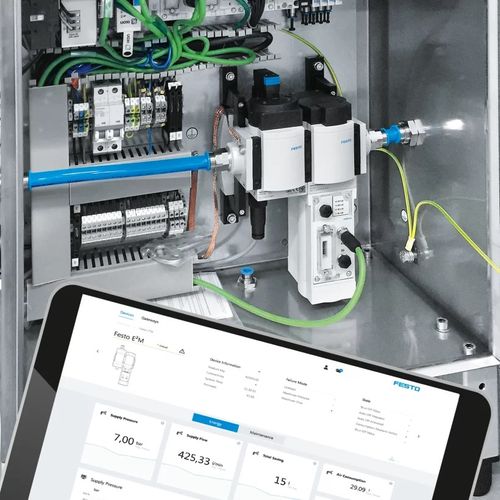
Looking back to 2021, it was easy to consider Compressed air as something of a ‘free’ resource. Energy prices were low and manufacturers generating compressed air for one area of their factory could utilise it in another area for next to zero marginal cost. However, since energy prices began their upwards journey, compressed air is no longer the cheap commodity it once used to be. In 2022, the British Compressed Air Society (BCAS) conducted research into the extent of compressed air use in UK industry. They found that 70% [1]of UK industry uses compressed air in some form or another and that on average, 30% of a business’s entire energy costs could be attributed to compressed air generation. Using figures from the (then recent) UK Energy-related products policy study, conducted by ICF in May 2021, they calculated the combined energy usage for the mid-point of all industrial compressor technologies over their lifetime at 11.71 TWh. [2] Based on the current UK average non-domestic electrical unit cost of 12.49p/kWh [3] at the time, the figures were substantial - equating to £1.475 billion being spent by UK companies to generate the compressed air their businesses rely on. Add to this the fact that on average 32.9 per cent of this energy was being wasted through leaks and inefficient practices - equivalent to £485.43 million in wasted electricity spend - and we began to understand the extent of which this presents a problem for UK manufacturing. Skip forwards to today and the Department of Business, Energy and Industrial Strategy (BEIS) has recently published its figures for UK average non-domestic electricity costs for the final quarter of 2022. This figure now stands at 24.56p/kWh [4] according to statistics, but it is estimated that many industrial tariffs are now reaching as high as 50.73p/kWh [5] as of January 2023. If we use the Governments current published figures as a starting point and adjust the BCAS research for today's prices, we find that £2.943 billion is being used to generate compressed air in the UK. At a loss rate of 32.9%, that’s almost £1 billon of wasted energy every year in the UK, equivalent to £2.62 million every single day. This staggering figure may come as a surprise to many of the UK’s manufacturers who have until recently worked on an ‘out of sight, out of mind’ policy when it comes to monitoring exactly what is going on within their compressor houses. It’s with this in mind that industry veterans Thorite recently launched their ‘Behind Closed Doors’ campaign, urging businesses to gain a better insight into what their compressors are actually doing for them. From scheduled leak testing to automatic shut-off valves, data logging to flow control and monitoring, the options for saving energy are numerous and the results are astonishing. While energy savings in the past might have been outweighed by the cost of fixing leaks, thanks to the latest energy prices, the return on investment to combat inefficiencies is now months, not years. Not to mention the opportunity to reduce carbon emissions by up to 3.2 tons per year - A consideration that companies can’t help but be aware of. With all things considered, isn’t it time your company found out what is happening behind closed doors? [1] https://www.bcas.org.uk/knowledge-base/compressed-air-at-a-glance.aspx [2] Data obtained from the UK Energy-related products policy study. Conducted for the Department for Business, Energy, & Industrial Strategy by ICF Consulting Services Limited. [3] https://www.gov.uk/government/statistical-data-sets/gas-and-electricity-prices-in-the-non-domestic-sector [05/2021] [4] https://www.gov.uk/government/statistical-data-sets/gas-and-electricity-prices-in-the-non-domestic-sector [12/2022] [5] https://www.businessenergy.com [02/2023]

So what exactly is FE? FE is study, usually for learners 16+, that takes place after secondary school. It can be the next step for young people and school leavers, but is equally accessible to adults looking to broaden their skills or change careers. FE providers include (but are not limited to) sixth-form or specialist colleges, prisons and independent training providers, and there are a wide range of subjects and qualifications on offer, with a unique choice of technical and vocational courses that aim to equip learners with practical, work-based skills. Students can gain qualifications in a broad range of subjects, including engineering, manufacturing, construction and trades, legal, finance and accountancy, digital and IT, and health and social care – to name but a few. FE offers qualifications across many different levels, from basic literacy and numeracy to advanced and higher education qualifications in traditional academic subjects. The recently introduced T-levels are studied for in FE, for example. These two-year courses, equivalent to three A-levels, are delivered by FE providers in partnership with local employers and are accepted as qualifications for university admissions. They range in subject area from healthcare science to building services engineering. Apprenticeships also fall under FE. Combining work-based training with an employer with teaching at an FE college or other provider, they prepare students for work and can lead to a variety of qualifications, from chartered surveyor to data technician. What does being an FE teacher entail? Vocational – ie courses closely related to jobs – can be taught by people who have hands-on experience of what they’re talking about. This is where you could come in. Teaching in FE is an opportunity to change lives without changing your career, by sharing your industry skills with others. Depending on the subject, you might be based in the classroom, a laboratory or a workshop. You might even do some of your teaching on the premises of employers where your students are undergoing work experience. From day one, your students will be reaping the benefits of your expertise – and you’ll be learning too. In fact, many FE teachers find that their students’ questions not only keep them on their toes, but also reignite their passion for their industry. A student who wants a career in healthcare or engineering, for example, will best learn what’s really involved in those jobs from someone who has recent – or current – experience of them. FE providers are equipped with specialist facilities such as science labs, engineering workshops and even hospital wards, so much of the teaching is as hands-on as it can get. The other great thing about teaching in FE is the readily available part-time contracts, giving you flexibility over the number of hours you work. In FE, you can work full-time, part-time, evenings, or even on a casual, hourly basis. If you want the best of both worlds, you can continue with your existing job while teaching part-time. So, how do you become an FE teacher? Unlike becoming a schoolteacher, as long as you have appropriate industry experience, you may not need a degree or teaching qualification to get started. FE employers will usually want you to work towards a teaching qualification, but there is support in place so you can train on the job. For example, there are programmes that cover the cost for new industry recruits to undertake teacher training while they work as a salaried teacher, such as the government-funded Taking Teaching Further programme. You may also be offered the opportunity to do a teaching apprenticeship which will combine training alongside your teaching responsibilities. Alternatively, you could choose to train in your own time before getting a job in FE if that feels like a better fit for you. What can you expect from a career in FE? People who have made the switch talk about the variety of the job, the satisfaction of passing on skills, and the energising feeling that comes from spending time with people who are committed and enthusiastic. When you’ve reached the stage of feeling comfortable in a well-established industry career, starting a new – or secondary – career as an FE teacher is the perfect way to challenge yourself and make the most of what you know. Passing your skills on to a new generation can be invigorating, inspiring and, quite possibly, the most rewarding thing you’ll ever do. To find out more about a rewarding career as a teacher in further education, head to teach-in-further-education.campaign.gov.uk